
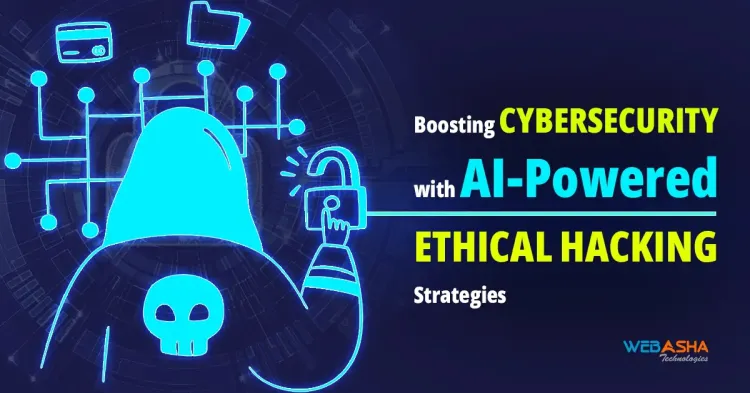
Boosting Cybersecurity with AI-Powered Ethical Hacking Strategies
Discover how AI-powered ethical hacking strategies are transforming cybersecurity. Explore advanced threat detection, automated vulnerability management, and continuous penetration testing with AI. Learn how integrating AI tools enhances your security measures and keeps you ahead of evolving cyber threats.
Quick answer: AI strengthens ethical hacking by analysing large volumes of data in real time, spotting patterns that signal attacks, and learning normal behaviour so unusual activity stands out. It speeds up vulnerability discovery and triage, while human testers still decide what matters, confirm findings and stay within the agreed scope.
Key takeaways
- AI can analyse large amounts of data and spot patterns that point to weaknesses.
- Human review is still needed for every finding.
- Do not feed client data into public AI tools.
Cybersecurity threats are becoming more sophisticated. To keep up with attackers, organizations are using advanced technologies, particularly Artificial Intelligence (AI), to improve their ethical hacking strategies. AI-powered tools help identify vulnerabilities, detect threats and strengthen security measures. Here’s how AI-powered ethical hacking strategies can boost cybersecurity:
Advanced Threat Detection and Response
AI enhances threat detection by analyzing vast amounts of data in real time and identifying patterns indicative of cyber threats.
-
Behavioral Analysis: AI algorithms can establish a baseline of normal behavior for users and systems. By monitoring deviations from this baseline, AI can detect potential security incidents more accurately than traditional methods. For example, AI can identify unusual login patterns or abnormal network traffic that may indicate a breach.
-
Anomaly Detection: Machine learning models can analyze network activity and system behavior to detect anomalies that might signify an attack. AI’s ability to recognize subtle and complex patterns helps in identifying sophisticated threats that might bypass conventional security measures.
Automated Vulnerability Scanning and Management
AI-powered vulnerability scanners automate the process of identifying and assessing security weaknesses in systems and applications.
-
Automated Scanning: AI tools can perform thorough scans of network environments, applications, and systems to identify vulnerabilities. These tools can quickly and accurately detect issues such as outdated software, misconfigurations, and unpatched vulnerabilities.
-
Prioritization and Remediation: AI can prioritize vulnerabilities based on factors like exploitability and potential impact. This helps ethical hackers focus on the most critical issues first. AI-driven tools can also recommend or automate remediation actions, reducing the time and effort required to address vulnerabilities.
Enhanced Penetration Testing
Penetration testing, or ethical hacking, benefits significantly from AI integration. AI tools can automate and streamline various aspects of penetration testing.
-
Automated Testing: AI can simulate various attack scenarios and test the resilience of systems against different types of cyber threats. This includes automated discovery of vulnerabilities and testing for common exploits.
-
Continuous Testing: AI allows for continuous penetration testing, where systems are regularly and automatically tested for vulnerabilities. This ongoing approach helps in identifying new vulnerabilities and assessing the effectiveness of security measures in real time.
AI-Driven Threat Intelligence
Threat intelligence platforms powered by AI gather, analyze, and interpret data from multiple sources to provide actionable insights into emerging threats.
-
Real-Time Analysis: AI tools can analyze data from threat feeds, security logs, and other sources to provide real-time threat intelligence. This information helps ethical hackers stay informed about the latest attack trends and tactics used by cybercriminals.
-
Predictive Analytics: AI can use historical data and predictive models to anticipate future threats. By identifying trends and patterns, AI helps ethical hackers prepare for potential attacks and strengthen defenses accordingly.
Behavioral Analytics and Insider Threat Detection
AI excels in analyzing user behavior and detecting signs of potential insider threats.
-
User Behavior Analytics (UBA): AI can monitor user activities to identify unusual behavior that may indicate malicious intent. For instance, AI can detect abnormal access patterns or unauthorized data access, which might suggest insider threats or compromised accounts.
-
Insider Threat Detection: AI models can analyze patterns of user behavior to identify potential insider threats, such as employees with access to sensitive information who exhibit unusual activities.
Phishing Detection and Prevention
Phishing attacks continue to be a significant threat, and AI tools help detect and prevent them.
-
Email Filtering: AI can analyze email content and metadata to identify phishing attempts. By detecting suspicious links, attachments, and sender behaviors, AI helps prevent phishing emails from reaching users.
-
User Training: AI-powered platforms can simulate phishing attacks to train users on recognizing and responding to phishing attempts. This proactive approach helps improve user awareness and resilience against phishing attacks.
Automation of Repetitive Tasks
AI can automate routine and repetitive tasks, freeing up ethical hackers to focus on more complex and strategic activities.
-
Task Automation: Routine tasks such as data collection, log analysis, and vulnerability scanning can be automated using AI. This not only increases efficiency but also reduces the risk of human error.
-
Efficiency Gains: By automating repetitive tasks, ethical hackers can dedicate more time to analyzing results, developing strategies, and addressing complex security issues.
Integration with Existing Security Frameworks
AI tools should complement and integrate with existing security frameworks and processes to enhance overall effectiveness.
-
Smooth Integration: Ensure that AI tools integrate smoothly with existing security infrastructure, such as Security Information and Event Management (SIEM) systems and Incident Response platforms. This integration gives one joined-up approach to cybersecurity.
-
Collaboration: AI tools should work in harmony with human expertise. Ethical hackers must interpret AI-generated insights and validate findings to ensure accurate and actionable outcomes.
Continuous Improvement and Adaptation
AI tools and strategies must continuously evolve to keep pace with the changing threat landscape.
-
Ongoing Training: Regularly update and train AI models with new data to ensure they remain effective against emerging threats. This includes retraining models based on the latest attack patterns and vulnerabilities.
-
Feedback Loop: Implement a feedback loop where ethical hackers provide input on AI tool performance. This feedback helps refine algorithms and improve the accuracy and relevance of AI-driven insights.
Conclusion
AI-powered ethical hacking strategies offer a powerful approach to enhancing cybersecurity. By leveraging AI tools for advanced threat detection, automated vulnerability management, and continuous penetration testing, organizations can stay ahead of evolving cyber threats. Integrating AI into ethical hacking practices not only boosts efficiency but also provides deeper insights into potential vulnerabilities and attack vectors. Embracing AI in cybersecurity is not just a trend, it’s a strategic move toward building a more resilient and proactive security posture.
To take this further with guided labs and an instructor, see our CEH v13 AI certification programme.
Related reading
- How AI and Automation are Revolutionizing Ethical Hacking and Vulnerability Testing
- Boost Your Ethical Hacking Skills with AI and Automation for Better Vulnerability Detection
- 20 Use Cases of Generative AI in Cybersecurity
- How to Detect an Insider Threat – Digital & Behavioral Warning Signs Explained
Reference
For the authoritative details, see EC-Council CEH.
Frequently Asked Questions
What's Your Reaction?
 Like
0
Like
0
 Dislike
0
Dislike
0
 Love
0
Love
0
 Funny
0
Funny
0
 Wow
0
Wow
0
 Sad
0
Sad
0
 Angry
0
Angry
0

I am passionate about technology, invention and big challenging tasks on my to- do list. In terms of the work I am doing also at Bunnyshell, I am most passionate about the technologies that we are using., I'm devoted to delivering content that not only informs but also inspires. Whether you need in- depth analysis pieces, educational attendants, or study- provoking opinion pieces, I draft content that resonates with tech suckers and professionals likewise.










![Top 10 Famous Ethical Hackers in India [Updated 2026]](https://www.webasha.com/blog/uploads/images/202608/image_140x98_da23f65c290cfbf1237d77aec58a2f0f.jpg)