
From Finance to Healthcare | The Rising Demand for Cybersecurity Analysts
Cybersecurity analysts, industries hiring cybersecurity analysts, cybersecurity job roles, financial sector cybersecurity, healthcare cybersecurity, government cybersecurity jobs, IT and technology cybersecurity, retail and e-commerce security, critical infrastructure security, cybersecurity career paths, telecommunications security, emerging industries in cybersecurity, energy sector cybersecurity, media and entertainment security, manufacturing cybersecurity, smart buildings security, cybersecurity certifications, entry-level cybersecurity jobs, network security, cybersecurity skills.
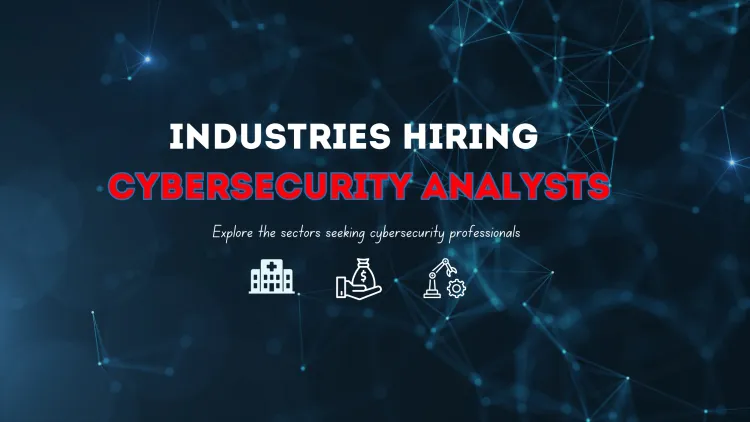
Quick answer: Finance, healthcare, government, IT services, e-commerce and telecom are among the industries that hire cybersecurity analysts. They hold sensitive data and face constant attacks, so they need people who monitor threats, manage vulnerabilities and respond to incidents. The roles differ a little by sector, but the core skills stay the same.
Key takeaways
- Finance, healthcare, government, IT services, e-commerce and telecom all hire analysts.
- Regulated sectors often need compliance-aware analysts.
- Pick an industry whose data and rules you can learn.
Cybersecurity analysts protect organizations from cyber threats and data breaches. As cyberattacks grow more sophisticated, organizations across various sectors are investing heavily in skilled cybersecurity professionals. From financial institutions to healthcare providers, the need for strong cybersecurity measures keeps growing.
This blog covers the key industries that actively hire cybersecurity analysts, why they need these professionals, and the specific roles available in each sector.
Why Do Organizations Need Cybersecurity Analysts?
The exponential growth in digital transformation has increased the risks of cyberattacks, ransomware, phishing schemes, and data theft. Organizations need cybersecurity analysts to:
- Monitor systems for vulnerabilities.
- Prevent unauthorized access.
- Ensure compliance with regulatory standards.
- Minimize the financial and reputational damage caused by cyber incidents.
What Are the Top Industries That Hire Cybersecurity Analysts?
1. Financial Services
The financial sector is one of the most targeted industries for cyberattacks. With sensitive customer data and billions of dollars at stake, banks and financial institutions are heavily invested in cybersecurity.
Roles Available:
- Fraud Detection Analyst
- Incident Response Specialist
- Cyber Risk Analyst
Why Cybersecurity is Critical:
- Protects online transactions and personal banking details.
- Ensures compliance with standards like PCI DSS and GDPR.
- Prevents large-scale fraud and ransomware attacks.
2. Healthcare
Healthcare organizations are prime targets due to the sensitive nature of patient records and the rise in ransomware attacks targeting hospitals.
Roles Available:
- Security Compliance Analyst
- Medical Data Security Specialist
- Cyber Threat Intelligence Analyst
Why Cybersecurity is Critical:
- Secures electronic health records (EHRs).
- Protects critical medical devices connected to networks.
- Prevents downtime during cyberattacks, which can endanger lives.
3. Government and Public Sector
Government agencies face constant threats from cybercriminals and nation-state actors targeting classified information and infrastructure.
Roles Available:
- Cyber Defense Analyst
- Network Security Specialist
- Intelligence Analyst
Why Cybersecurity is Critical:
- Protects classified government data.
- Safeguards national infrastructure like power grids and transportation systems.
- Mitigates threats from foreign adversaries.
4. Technology and IT
The tech industry, including software development and IT services, is at the forefront of cybersecurity innovation and requires professionals to protect intellectual property and customer data.
Roles Available:
- Application Security Analyst
- Cloud Security Engineer
- Security Operations Center (SOC) Analyst
Why Cybersecurity is Critical:
- Prevents data breaches of sensitive intellectual property.
- Secures software and cloud-based solutions from vulnerabilities.
- Builds trust with customers by ensuring secure platforms.
5. Retail and E-commerce
Retailers, especially those operating online, are frequent targets for credit card fraud and data breaches involving customer information.
Roles Available:
- Payment Security Analyst
- Data Privacy Specialist
- Endpoint Security Analyst
Why Cybersecurity is Critical:
- Ensures secure online payment systems.
- Prevents theft of customer credit card details and personal data.
- Maintains compliance with PCI DSS and other data protection regulations.
6. Education
Educational institutions store vast amounts of sensitive data, including student records, research findings, and administrative information, making them attractive targets for hackers.
Roles Available:
- Network Security Administrator
- Data Protection Officer
- Research Security Analyst
Why Cybersecurity is Critical:
- Protects student and staff data from identity theft.
- Secures research projects against intellectual property theft.
- Prevents disruption of online learning platforms.
7. Energy and Utilities
The energy sector faces unique challenges due to the interconnected nature of critical infrastructure like power plants and water systems.
Roles Available:
- Critical Infrastructure Security Analyst
- Industrial Control Systems (ICS) Security Specialist
- OT (Operational Technology) Security Analyst
Why Cybersecurity is Critical:
- Prevents cyberattacks that could disrupt power and water supplies.
- Secures smart grid technologies from vulnerabilities.
- Protects against ransomware attacks targeting critical services.
8. Telecommunications
Telecom companies manage vast amounts of data and provide infrastructure for internet and phone services, making them a prime target for cybercriminals.
Roles Available:
- Network Security Engineer
- Telecom Fraud Analyst
- Cyber Threat Hunter
Why Cybersecurity is Critical:
- Secures communication networks from breaches and espionage.
- Prevents service disruptions caused by cyberattacks.
- Protects sensitive customer data.
Which Emerging Industries Are Hiring Cybersecurity Analysts?
1. Media and Entertainment
The digitization of media has increased risks of piracy, intellectual property theft, and ransomware attacks.
2. Manufacturing
With the rise of Industry 4.0 and IoT, manufacturers are prioritizing cybersecurity to secure connected devices and supply chains.
3. Real Estate
As smart buildings and IoT devices become more common, real estate companies require cybersecurity professionals to secure data and infrastructure.
How Do You Identify Opportunities in These Industries?
- Research Industry-Specific Threats: Understand the unique cybersecurity challenges each industry faces.
- Network with Professionals: Connect with cybersecurity analysts working in your desired sector through LinkedIn and industry events.
- Focus on Relevant Certifications: Certifications like CompTIA Security+, CEH, and CISSP often align with specific industry requirements.
Conclusion
From finance to energy, cybersecurity analysts are in demand across many industries. Growing dependence on technology and changing threats make cybersecurity a necessary function in every organization. If you understand the needs and roles within different sectors, you can match your skills and certifications to build a career as a cybersecurity analyst.
To take this further with guided labs and an instructor, see our cyber security fundamentals programme.
Related reading
Frequently Asked Questions
What's Your Reaction?
 Like
0
Like
0
 Dislike
0
Dislike
0
 Love
0
Love
0
 Funny
0
Funny
0
 Wow
0
Wow
0
 Sad
0
Sad
0
 Angry
0
Angry
0

Vaishnavi is a skilled tech professional at the Ethical Hacking Training Institute in Pune, responsible for managing and optimizing the technical infrastructure that supports advanced cybersecurity education. With deep expertise in network security, backend operations, and system performance, she ensures that practical labs, online modules, and assessments run smoothly and securely. Her behind-the-scenes contributions play a vital role in delivering a seamless and secure learning experience for aspiring ethical hackers.







![Top 10 Famous Ethical Hackers in India [Updated 2026]](https://www.webasha.com/blog/uploads/images/202608/image_140x98_da23f65c290cfbf1237d77aec58a2f0f.jpg)

