
How AI is Helping Companies Combat Fraud | Machine Learning, Predictive Analytics, and Real-Time Threat Detection
Fraud is a growing threat in the digital era, affecting businesses across banking, finance, e-commerce, healthcare, insurance, and cybersecurity. Traditional fraud detection systems rely on rule-based models, which often fail to detect complex fraud schemes. Artificial Intelligence (AI) is revolutionizing fraud prevention by leveraging machine learning, predictive analytics, behavioral biometrics, and real-time transaction monitoring to detect and prevent fraudulent activities. AI-powered fraud detection systems analyze vast amounts of data, identify suspicious patterns, and automate risk assessments. From real-time transaction monitoring to biometric authentication and deep learning models, AI enhances fraud detection accuracy, reduces false positives, and protects businesses from financial losses. This blog explores how AI combats fraud, the benefits of AI in fraud detection, and the industries leveraging AI-powered security systems.
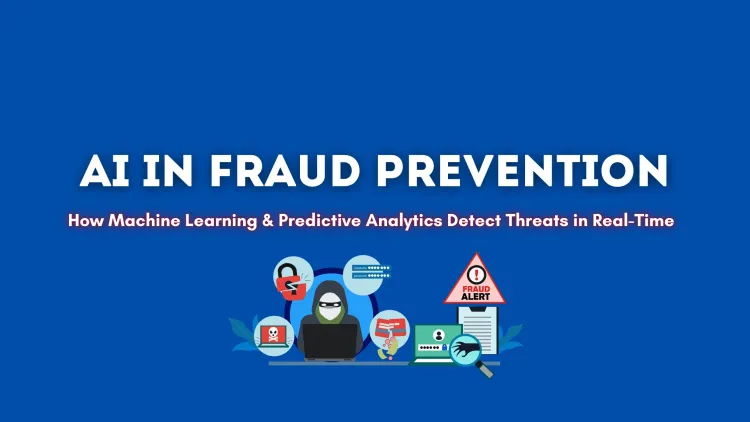
Quick answer: Companies use AI to combat fraud by analysing transactions and user behaviour in real time, spotting patterns that rule-based systems miss, and scoring risk before money moves. Banks, e-commerce and healthcare use it widely. Challenges include false positives, data quality, privacy rules and the need for human review.
Key takeaways
- AI scores risk before a payment completes, which stops loss rather than reporting it later.
- Combine device, location and behaviour signals for better accuracy.
- Plan a manual review route for blocked genuine customers.
Table of Contents
- Introduction
- The Growing Threat of Fraud in Businesses
- How AI is Revolutionizing Fraud Detection
- Benefits of AI in Fraud Prevention
- Industries Using AI for Fraud Prevention
- Challenges in AI-Based Fraud Detection
- The Future of AI in Fraud Prevention
- Conclusion
Introduction
Fraud has become a growing concern for businesses across industries, leading to financial losses, reputational damage, and regulatory penalties. Traditional fraud detection methods rely on rule-based systems that often fail to catch sophisticated fraudulent activities. However, Artificial Intelligence (AI) is transforming fraud detection and prevention by enabling real-time analysis, predictive analytics, and automated risk assessment.
From banking and finance to e-commerce and healthcare, companies are using AI-driven fraud detection systems to analyze vast amounts of data, detect anomalies, and prevent fraudulent transactions before they cause damage. This post explains how AI is changing fraud prevention, the key benefits it offers and how businesses can implement AI-driven solutions to keep ahead of fraudsters.
The Growing Threat of Fraud in Businesses
Fraud can take many forms, including financial fraud, identity theft, cyber fraud, insurance fraud, and transaction fraud. With the rise of digital transactions, businesses face an increasing number of fraud attempts, such as:
- Payment fraud: Unauthorized transactions, chargeback fraud, and stolen credit card use.
- Identity theft: Fraudsters use stolen personal information to access accounts or apply for loans.
- Insider fraud: Employees manipulate systems for financial gain.
- Phishing and social engineering: Attackers deceive employees or customers to obtain sensitive data.
Traditional fraud detection systems rely on predefined rules that flag suspicious activities. However, fraudsters continuously evolve their tactics, making it difficult for rule-based systems to keep up. This is where AI-driven fraud detection systems come into play.
How AI is Revolutionizing Fraud Detection
1. Machine Learning for Fraud Detection
AI-powered fraud detection systems use machine learning (ML) algorithms to identify patterns and detect fraudulent activities. Machine learning models analyze vast datasets and recognize unusual behaviors that deviate from normal transaction patterns. These systems continuously learn and improve their accuracy over time.
For example:
- AI can detect unusual spending behaviors in financial transactions.
- It can identify suspicious login attempts from new locations or devices.
- Machine learning models can recognize fraudulent e-commerce transactions based on historical data.
2. Real-Time Fraud Prevention with AI
Unlike traditional systems that rely on post-transaction fraud detection, AI enables real-time fraud detection and prevention. AI models analyze transactions as they occur, flagging potentially fraudulent activities and preventing them before they are processed.
For instance:
- AI detects suspicious withdrawals and alerts banks to block unauthorized transactions.
- Online retailers use AI to prevent fake chargebacks and refund fraud.
- AI-powered systems stop account takeovers and unauthorized access attempts.
3. Behavioral Analytics to Identify Anomalies
AI leverages behavioral analytics to track user behavior and identify fraudulent activities. By analyzing factors such as:
- Mouse movements and keystroke patterns (for detecting bot attacks).
- Login times and device locations (to prevent account takeovers).
- Spending habits and transaction history (to detect payment fraud).
Businesses can differentiate between genuine users and fraudsters in real time.
4. AI-Powered Chatbots for Fraud Prevention
AI-driven chatbots enhance fraud prevention by:
- Verifying user identities through biometric authentication.
- Detecting phishing attempts and scam messages.
- Providing real-time fraud alerts to customers.
5. Deep Learning for Image and Document Fraud Detection
Deep learning models analyze images, documents, and videos to detect forged identities and fraudulent documents. AI-powered tools can:
- Identify fake ID documents and manipulated images in KYC (Know Your Customer) verification.
- Detect forged signatures in financial transactions.
- Prevent deepfake fraud and identity spoofing.
6. AI and Blockchain for Secure Transactions
AI combined with blockchain technology enhances fraud detection by:
- Ensuring tamper-proof transaction records.
- Detecting suspicious blockchain transactions in cryptocurrencies.
- Enhancing supply chain security by tracking product authenticity.
7. Natural Language Processing (NLP) for Fraud Detection
NLP-powered AI systems analyze emails, social media, and customer interactions to detect fraudulent messages and scams. Companies use NLP for:
- Detecting phishing emails and spam messages.
- Analyzing customer complaints to identify fraud trends.
- Monitoring dark web discussions for leaked company data.
Benefits of AI in Fraud Prevention
| AI-Powered Fraud Prevention Features | Business Benefits |
|---|---|
| Real-time fraud detection | Prevents fraudulent transactions before they occur. |
| Predictive analytics | Identifies fraud patterns and future risks. |
| Behavioral biometrics | Reduces false positives and improves accuracy. |
| Automated risk assessment | Saves time and enhances decision-making. |
| Scalable fraud detection | Adapts to growing transaction volumes. |
| Dark web monitoring | Detects leaked customer and company data. |
Industries Using AI for Fraud Prevention
1. Banking and Finance
- AI-powered fraud detection in credit card transactions.
- Automated detection of money laundering activities.
- Secure customer authentication using biometrics and AI-driven KYC verification.
2. E-Commerce and Retail
- AI prevents chargeback fraud and fake returns.
- Detects fake reviews and fake seller accounts.
- Enhances customer transaction security.
3. Healthcare and Insurance
- AI detects fake insurance claims and medical billing fraud.
- Identifies unusual prescription patterns to prevent fraud.
- Protects patient records from data breaches.
4. Telecommunications and Cybersecurity
- AI stops SIM swap fraud and unauthorized account access.
- Detects phishing scams targeting telecom users.
- Prevents telecom fraud in mobile payments.
Challenges in AI-Based Fraud Detection
While AI offers advanced fraud detection capabilities, businesses must address challenges such as:
- False positives: AI systems may incorrectly flag legitimate transactions.
- Data privacy concerns: Companies must ensure compliance with GDPR, CCPA, and other regulations.
- Cybercriminal AI: Fraudsters also use AI to bypass security measures.
To overcome these challenges, businesses should implement AI-driven fraud detection with human oversight.
The Future of AI in Fraud Prevention
As fraud tactics evolve, AI will continue to play a critical role in fraud prevention. Future developments include:
- AI-driven predictive fraud analytics for early risk detection.
- AI-powered facial recognition for secure identity verification.
- Blockchain-integrated AI for secure and transparent transactions.
- Quantum AI for fraud detection with next-generation encryption.
Businesses that adopt AI-driven fraud detection solutions will gain a competitive edge by reducing fraud losses, enhancing security, and building customer trust.
Conclusion
AI is transforming fraud detection by offering real-time analysis, machine learning-based pattern recognition, and automated fraud prevention. From financial fraud to identity theft and phishing scams, AI-driven fraud detection systems provide a proactive approach to mitigating risks.
As fraudsters become more sophisticated, businesses must invest in AI-powered fraud prevention tools to stay ahead of cybercriminals and protect their customers, assets, and reputations.
To take this further with guided labs and an instructor, see our hands-on machine learning programme.
Related reading
- Can AI Stop Credit Card Fraud? Exploring AI-Powered Fraud Detection, Real-Time Monitoring, and Biometric Authentication for Financial Security
- How AI is Revolutionizing Financial Cybersecurity | Preventing Fraud, Money Laundering, and Cyber Threats with AI-Powered Solutions
- The Best AI Tools for Preventing Online Fraud | How AI is Fighting Cybercriminals
Frequently Asked Questions
What's Your Reaction?
 Like
0
Like
0
 Dislike
0
Dislike
0
 Love
0
Love
0
 Funny
0
Funny
0
 Wow
0
Wow
0
 Sad
0
Sad
0
 Angry
0
Angry
0

Vaishnavi is a skilled tech professional at the Ethical Hacking Training Institute in Pune, responsible for managing and optimizing the technical infrastructure that supports advanced cybersecurity education. With deep expertise in network security, backend operations, and system performance, she ensures that practical labs, online modules, and assessments run smoothly and securely. Her behind-the-scenes contributions play a vital role in delivering a seamless and secure learning experience for aspiring ethical hackers.













![Top 10 Famous Ethical Hackers in India [Updated 2026]](https://www.webasha.com/blog/uploads/images/202608/image_140x98_da23f65c290cfbf1237d77aec58a2f0f.jpg)