How AI is Preventing Cloud Data Breaches | Enhancing Cloud Security with Artificial Intelligence
As businesses migrate their operations to the cloud, data breaches remain a significant threat. Traditional security methods struggle to handle evolving cyber threats, making AI-powered security solutions crucial for detecting, preventing, and responding to cyberattacks in real time. AI enhances threat detection, access control, anomaly detection, and predictive analytics to strengthen cloud security. This blog explores how AI is transforming cloud security, its benefits, real-world applications, and potential challenges. We also answer 30 frequently asked questions about AI in cloud security and data breach prevention.
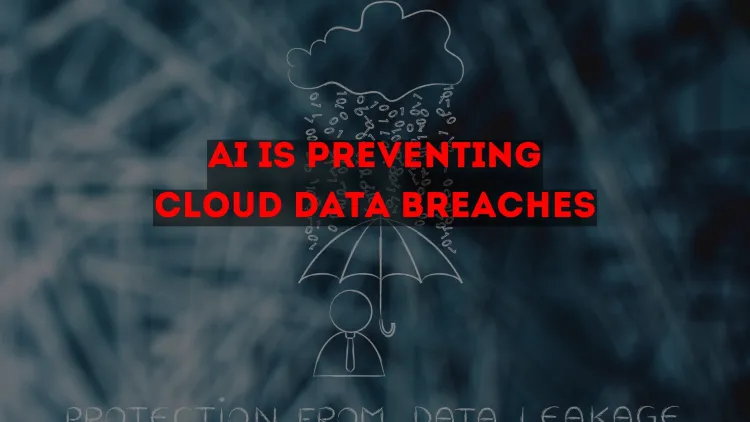
Quick answer: AI helps prevent cloud data breaches by spotting unusual access, detecting misconfigurations early, flagging data exfiltration and triggering automated responses such as blocking an account. It cuts detection time but is not a complete shield. Strong access control, encryption and regular audits are still needed alongside it.
Key takeaways
- Detecting data exfiltration early limits damage, so monitor unusual download volumes.
- Automated responses such as disabling a key should have a human override.
- Encrypt data and rotate keys regardless of AI use.
Table of Contents
- Introduction
- How AI is Revolutionizing Cloud Security?
- Key Ways AI Prevents Cloud Data Breaches
- Traditional Security vs. AI-Powered Cloud Security
- Real-World Use Cases of AI in Cloud Security
- Challenges and Limitations of AI in Cloud Security
- Future of AI in Cloud Security
- Conclusion
Introduction
More businesses are moving their operations to the cloud, and data breaches have become a major concern. Cloud environments store sensitive information, which makes them attractive targets for cybercriminals. Traditional security measures are no longer enough to handle evolving cyber threats, and this is where Artificial Intelligence (AI) helps.
AI gives cloud security real-time threat detection, automated response mechanisms, and predictive analytics. AI can prevent cloud data breaches, and it comes with benefits, challenges and real-world applications.
How AI is Revolutionizing Cloud Security?
AI enhances cloud security by:
- Detecting anomalies before they turn into full-scale breaches.
- Automating threat responses, reducing human intervention.
- Predicting future attacks based on past data patterns.
- Monitoring cloud networks in real-time for suspicious activities.
- Strengthening access control through AI-driven authentication.
Key Ways AI Prevents Cloud Data Breaches
1. AI-Powered Threat Detection
AI analyzes massive volumes of cloud activity logs, user behaviors, and network traffic to identify anomalous patterns that may indicate a cyberattack. Unlike traditional rule-based systems, AI adapts and learns from new threats, making it highly effective in detecting emerging attack vectors.
2. Predictive Analytics for Cyber Threats
AI leverages machine learning algorithms to analyze historical attack data and predict potential threats before they occur. This proactive security approach allows cloud providers to mitigate risks before hackers exploit vulnerabilities.
3. Automated Incident Response
When AI detects a security anomaly, it can automatically respond by:
- Blocking unauthorized access
- Isolating compromised accounts
- Triggering security alerts for administrators
- Initiating system-wide security updates
This automation significantly reduces response time, preventing hackers from infiltrating cloud systems.
4. AI-Based Access Control & Identity Verification
Weak passwords and unauthorized access are leading causes of cloud data breaches. AI strengthens security by:
- Using biometric authentication (face, voice, fingerprint recognition)
- Detecting unusual login patterns (such as logins from new devices or locations)
- Implementing adaptive authentication (adjusting security requirements based on user behavior)
5. AI for Cloud Misconfiguration Detection
A large percentage of cloud breaches occur due to misconfigurations, such as:
- Publicly exposed storage buckets
- Weak encryption settings
- Overly permissive access controls
AI continuously scans cloud configurations to detect vulnerabilities and suggest security improvements.
6. AI-Powered Malware & Ransomware Defense
AI analyzes file behavior in cloud environments to detect ransomware attacks, phishing links, and malicious code before they cause harm. By monitoring unusual file encryption activities, AI can block ransomware before it spreads.
7. AI for Cloud Compliance & Regulatory Security
AI ensures cloud security compliance with regulations like:
- GDPR (General Data Protection Regulation)
- HIPAA (Health Insurance Portability and Accountability Act)
- ISO 27001 (International Information Security Standard)
It continuously scans for policy violations and generates audit reports, helping organizations stay compliant.
Traditional Security vs. AI-Powered Cloud Security
| Feature | Traditional Security | AI-Powered Security |
|---|---|---|
| Threat Detection | Rule-based, static | Adaptive, learns patterns |
| Response Time | Slow, manual | Fast, automated |
| Detection of New Threats | Limited | Highly effective |
| Access Control | Password-based | AI-driven authentication |
| Predictive Analytics | Not available | Predicts & prevents threats |
| Compliance Monitoring | Manual audits | Automated policy checks |
Real-World Use Cases of AI in Cloud Security
1. Google Cloud’s AI Security Solutions
Google Cloud uses AI-powered threat detection systems like Chronicle to analyze security events in real time, helping businesses identify and prevent cyberattacks.
2. Microsoft Defender for Cloud
Microsoft integrates AI-driven security into its cloud services, using machine learning models to detect phishing attacks, malware, and suspicious login activities.
3. Amazon GuardDuty
AWS utilizes AI and machine learning to monitor user behaviors, API calls, and network traffic, identifying anomalies that could signal a data breach.
Challenges and Limitations of AI in Cloud Security
1. False Positives
AI can sometimes flag legitimate activities as threats, leading to unnecessary security alerts. This can cause alert fatigue among security teams.
2. Adversarial AI Attacks
Hackers can manipulate AI models to bypass security measures, requiring AI systems to be constantly updated and tested against adversarial threats.
3. High Implementation Costs
Deploying AI-driven security solutions can be expensive, making it difficult for small businesses to adopt these advanced protections.
4. Data Privacy Concerns
AI requires large amounts of data to function effectively, raising concerns about user privacy and data protection.
Future of AI in Cloud Security
The future of AI-powered cloud security looks promising, with advancements in:
- Self-learning AI security models
- AI-powered security automation
- Quantum computing for AI-driven encryption
- Enhanced AI-human collaboration in cybersecurity
As cyber threats change, AI will keep helping secure cloud environments by detecting, preventing, and mitigating attacks faster than traditional security systems.
Conclusion
AI offers real-time threat detection, automated responses, and predictive insights to prevent data breaches in the cloud. It has some challenges, but its ability to adapt, learn, and respond quickly makes it an essential tool for securing cloud infrastructure.
Businesses should invest in AI-powered security solutions to safeguard their cloud environments and stay ahead of evolving cyber threats.
To take this further with guided labs and an instructor, see our hands-on cloud security programme.
Related reading
- The Role of AI in Strengthening Cloud-Based Cybersecurity | Enhancing Threat Detection, Prevention, and Incident Response
- AI in Cloud Security | How Artificial Intelligence is Revolutionizing Threat Detection and Data Protection
- The Future of AI in Cloud Security |Trends, Challenges, and Innovations
Reference
For the authoritative details, see AWS documentation.
Frequently Asked Questions
What's Your Reaction?
 Like
0
Like
0
 Dislike
0
Dislike
0
 Love
0
Love
0
 Funny
0
Funny
0
 Wow
0
Wow
0
 Sad
0
Sad
0
 Angry
0
Angry
0

Vaishnavi is a skilled tech professional at the Ethical Hacking Training Institute in Pune, responsible for managing and optimizing the technical infrastructure that supports advanced cybersecurity education. With deep expertise in network security, backend operations, and system performance, she ensures that practical labs, online modules, and assessments run smoothly and securely. Her behind-the-scenes contributions play a vital role in delivering a seamless and secure learning experience for aspiring ethical hackers.