Roadmap to an IT Job in India Through Certifications
A practical route to an IT job in India is: choose one domain, learn its fundamentals, earn one entry-level certification, prove skill with labs and a small project, then apply for junior roles and add an intermediate certification once you are working.
Topic: Ethical Hacking in Cybersecurity & Ethical Hacking · Certification preparation
Also covers: Cybersecurity Careers & Certifications, Data Analytics & Data Science, Python for AI & Automation
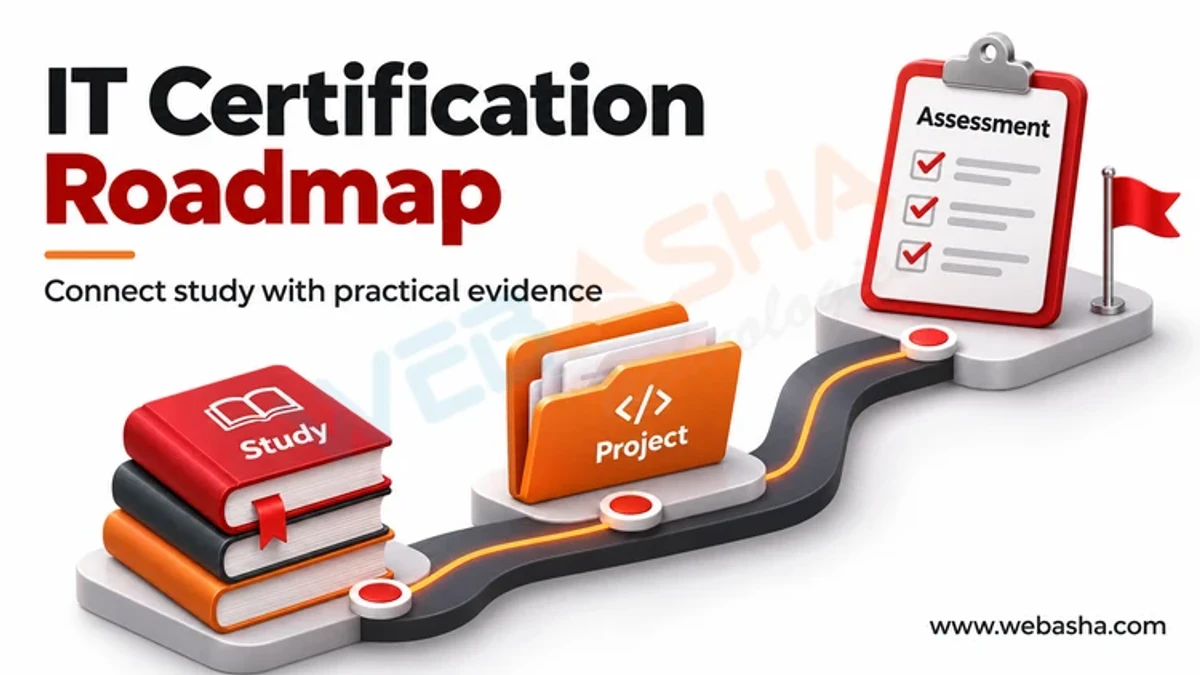
Quick answer: A practical route to an IT job in India is: choose one domain, learn its fundamentals, earn one entry-level certification, prove skill with labs and a small project, then apply for junior roles and add an intermediate certification once you are working. For cybersecurity that might mean Network+ then Security+ or ISC2 CC; for infrastructure, RHCSA or a cloud fundamentals exam; for data, PL-300; for Python, PCEP plus a portfolio. Certifications help you clear screening and structure your learning, but employers hire on demonstrated skill, so plan projects alongside every exam. Check exam codes on vendor sites because several changed in 2026.
Key takeaways
- Pick one domain first; collecting unrelated certificates slows you down.
- Pair every certification with a lab or project you can explain in an interview.
- ISC2 CC is no longer free for new candidates since 20 May 2026.
- CompTIA's launch date for Security+ SY0-801 is 17 November 2026; SY0-701 stays available until 11 June 2027 in English.
- No certification guarantees a job or a particular pay level.
Table of Contents
- Why Do Certifications Help an IT Career?
- What Are the Stages of the Roadmap?
- Which Certifications Fit Each Domain?
- Which Certification Facts Changed Recently?
- What Projects Should Go With Each Certification?
- How Do You Turn Certifications Into Interviews?
- What Mistakes Slow People Down?
- References
Why Do Certifications Help an IT Career?
A certification is a third-party check that you meet a published standard. It gives you a syllabus to follow, a deadline to work towards and a keyword that applicant tracking systems recognise. Frameworks such as the NIST NICE Framework and the CISA Cyber Career Pathways Tool show that roles are defined by tasks and skills, not certificates, which is why the roadmap below pairs each exam with practice.
What Are the Stages of the Roadmap?
- Foundation (1 to 3 months): computer basics, networking, Linux and Windows, plus basic scripting.
- First certification: one entry-level exam in your chosen domain.
- Portfolio: two or three documented labs or projects on GitHub or a blog.
- First job: support, junior analyst, junior developer or trainee roles.
- Intermediate certification: taken once you have real work experience to draw on.
- Specialisation: advanced exams only after you know which direction suits you.
Which Certifications Fit Each Domain?
| Domain | Entry level | Intermediate | Advanced (later) |
|---|---|---|---|
| Cybersecurity | Network+, ISC2 CC | Security+, CySA+ | CISSP after required experience |
| Ethical hacking | Security+ | CEH v13, PenTest+ | OSCP+ |
| IT infrastructure | CCNA or RHCSA | AZ-104 or AWS associate | RHCE, architect exams |
| Data | PL-300, Python basics | Cloud data engineer exams | Specialist ML credentials |
| Full stack Python | PCEP | PCAP and framework projects | Cloud developer exams |
Vendor pages describe each exam: CompTIA Network+ N10-009, EC-Council CEH v13, Red Hat RHCSA (EX200), Python Institute PCEP, Microsoft PL-300 and AWS Cloud Practitioner (CLF-C02).
Which Certification Facts Changed Recently?
- ISC2 CC: the One Million Certified in Cybersecurity programme closed to new enrolments on 20 May 2026. People already holding a valid code must sit the exam by 31 December 2026. New candidates now pay the standard exam fee, which ISC2 lists as US$199 plus an annual maintenance fee after passing.
- Security+: CompTIA gives 17 November 2026 as the launch date for the V8 exam, SY0-801. SY0-701 can still be taken until 11 June 2027 in English and remains valid for anyone who passes it.
- Microsoft: several Azure exams, including AZ-500 and AZ-204, retired in 2026, so check Microsoft Learn before planning a cloud path.
What Projects Should Go With Each Certification?
| Certification | Project that proves the skill |
|---|---|
| Network+ or CCNA | Design and document a small office network with VLANs |
| Security+ or CC | Harden a Linux server and write a short incident playbook |
| CEH or PenTest+ | Authorised lab assessment of a deliberately vulnerable VM, with a report |
| RHCSA | Automate user, storage and service setup with shell scripts |
| PL-300 | Public data dashboard with clear business questions |
| PCEP | A small web app with tests and a README |
Practise offensive skills only on systems you own or have written permission to test. Unauthorised access is an offence under Sections 43 and 66 of India's IT Act, 2000.
How Do You Turn Certifications Into Interviews?
List the certification, then one line on what you built with that knowledge. Apply to junior and trainee roles, internships and apprenticeships rather than waiting for a perfect title. Prepare to explain your projects step by step, because interviewers test understanding, not recall. For role ideas at this stage, see our guide to entry-level IT roles in India, and for why credentials matter in security, read the importance of certifications in a cybersecurity career.
What Mistakes Slow People Down?
- Starting with advanced exams such as CISSP or OSCP+ before the basics.
- Using exam dumps, which can breach vendor rules and leave skill gaps.
- Following old roadmaps that name retired exams.
- Paying anyone who promises a guaranteed placement or salary.
To follow a structured path with mentors and labs, explore WebAsha's IT and cybersecurity certification training.
References
- ISC2: One Million Certified in Cybersecurity
- ISC2: Certified in Cybersecurity
- CompTIA: Security+ V8 (SY0-801)
- CompTIA: Network+
- EC-Council: CEH v13
- Red Hat: RHCSA
- Python Institute: PCEP
- Microsoft Learn: Power BI Data Analyst Associate
- AWS: Certified Cloud Practitioner
- NIST: NICE Framework Resource Center
- CISA: Cyber Career Pathways Tool
Frequently Asked Questions
What's Your Reaction?
 Like
0
 Dislike
0
 Love
0
 Funny
0
 Wow
0
 Sad
0
 Angry
0

Vaishnavi is a skilled tech professional at the Ethical Hacking Training Institute in Pune, responsible for managing and optimizing the technical infrastructure that supports advanced cybersecurity education. With deep expertise in network security, backend operations, and system performance, she ensures that practical labs, online modules, and assessments run smoothly and securely. Her behind-the-scenes contributions play a vital role in delivering a seamless and secure learning experience for aspiring ethical hackers.