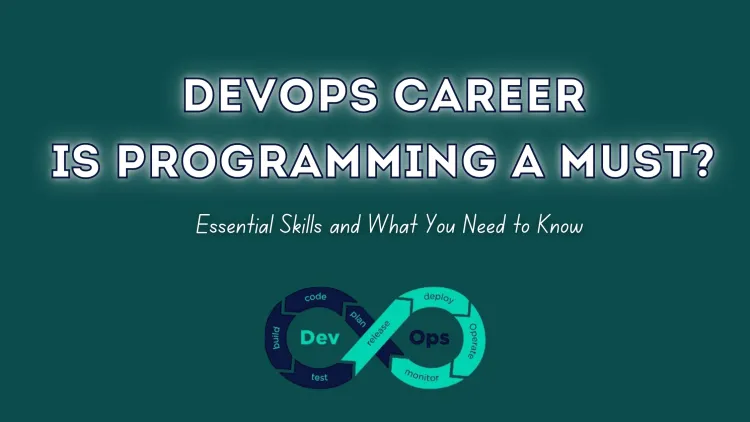
Do You Need Programming Skills for a DevOps Career? Here's What You Should Know
Programming knowledge is a vital skill for aspiring DevOps Engineers, enabling automation, collaboration, and efficient problem-solving. While expertise in software development isn’t required, understanding scripting languages like Python and Bash is essential. DevOps Engineers use programming to build CI/CD pipelines, automate infrastructure with IaC tools like Terraform, and debug application issues. Beginners should start with basic programming concepts and gradually explore real-world projects to gain confidence. With the right skills and tools, programming can significantly enhance your DevOps career trajectory.
Quick answer: You do not need to be a full software developer for a DevOps career, but you do need to script. Learn Bash and Python to automate tasks, read code well enough to troubleshoot builds, and write infrastructure as code. Deep application development is optional, while scripting and automation are not.
Key takeaways
- You must script, but need not be a full developer.
- Learn Bash and Python first.
- Read code, since pipelines use it daily.
The role of a DevOps Engineer has gained importance in modern IT and software development. As the bridge between development and operations, a DevOps Engineer supports collaboration, automation, and efficiency throughout the software development lifecycle. A common question asked by aspiring professionals is, “Do I need programming knowledge to become a DevOps Engineer?” Here is the role of programming in a DevOps career.
Understanding the Role of a DevOps Engineer
Before discussing programming knowledge, it’s important to understand what a DevOps Engineer does. The responsibilities often include:
- Implementing CI/CD pipelines for automated builds, tests, and deployments.
- Managing infrastructure using tools like Terraform, Ansible, or Kubernetes.
- Monitoring system performance using Prometheus, Nagios, or similar tools.
- Ensuring collaboration between development and IT operations teams.
- Automating repetitive tasks to improve system efficiency.
While these responsibilities don’t necessarily require a deep understanding of programming, they do involve working with scripts, code repositories, and configuration files.
Is Programming Knowledge Essential?
The short answer is: Yes, basic programming knowledge is essential. Here’s why:
1. Automation Requires Coding
Automation is at the heart of DevOps, and writing scripts is an important skill. Tasks like automating builds, deployments, or server configurations rely on scripting languages such as:
- Bash
- Python
- PowerShell
2. Understanding Development Processes
As a DevOps Engineer, you need to work closely with developers. Understanding programming languages like:
- Java
- JavaScript
- Ruby
- Go
can help you debug code, optimize build pipelines, and troubleshoot issues effectively.
3. Infrastructure as Code (IaC)
IaC tools like Terraform and CloudFormation require knowledge of configuration languages such as YAML, JSON, or HCL. Writing reusable templates and automating infrastructure deployments often involves coding skills.
4. CI/CD Pipeline Management
Managing CI/CD pipelines with tools like Jenkins, GitLab, or Azure DevOps involves writing build scripts and custom configurations. These tasks require familiarity with coding concepts.
5. Debugging and Troubleshooting
When something goes wrong in a deployment or system, you might need to dig into the application code or scripts to identify the root cause. Without programming knowledge, this becomes challenging.
How Much Programming Do You Need to Know?
You don’t need to be a software developer, but a foundational understanding of programming concepts is important. Here’s a breakdown of what you should focus on:
| Skill Area | Programming Knowledge Needed | Tools and Languages |
|---|---|---|
| Scripting for Automation | Basic knowledge of writing and debugging scripts. | Bash, Python, PowerShell |
| Version Control | Familiarity with managing code repositories and understanding version control systems. | Git, GitHub, GitLab |
| CI/CD Pipelines | Writing configuration scripts for pipeline automation. | Jenkins, Azure DevOps, CircleCI |
| IaC Tools | Creating and managing configuration files for infrastructure. | YAML, JSON, HCL (Terraform) |
| Basic Application Debugging | Understanding application structure to troubleshoot errors in logs or deployment. | Java, JavaScript, Ruby, Go |
Why Programming Knowledge Enhances Your DevOps Career
1. Improves Communication with Developers
By understanding programming languages, you can communicate effectively with development teams, ensuring smoother collaboration.
2. Better Problem-Solving
Debugging and troubleshooting require programming skills to identify issues in scripts, logs, and application code.
3. Increased Versatility
Programming knowledge makes you more versatile and opens doors to hybrid roles like DevSecOps or Cloud DevOps.
4. Advanced Automation
Complex automation workflows require advanced scripting, enabling you to tackle sophisticated challenges efficiently.
How to Learn Programming for DevOps
If you’re new to programming, start with these steps:
1. Learn the Basics
Focus on basic programming concepts like loops, conditions, and data structures. Python is an excellent starting point due to its simplicity and versatility.
2. Practice with Real-World Projects
Try writing scripts to automate tasks, such as:
- Backing up files.
- Deploying applications.
- Configuring servers.
3. Explore DevOps Tools
Learn how coding integrates with tools like:
- Terraform for infrastructure automation.
- Jenkins for CI/CD pipelines.
- Docker for container management.
4. Take Online Courses
Platforms like Udemy, Coursera, and Pluralsight offer beginner-friendly courses tailored for DevOps professionals.
Programming Alternatives in DevOps
If you’re not confident in programming, you can still contribute to DevOps in roles focused on:
- Monitoring and Alerting: Using tools like Splunk or Prometheus.
- Security Automation: Leveraging low-code solutions.
- Cloud Management: Using cloud-native tools with minimal coding.
While these roles may require less programming, having foundational knowledge will still be advantageous.
Conclusion
Programming knowledge is not optional for DevOps Engineers; it’s a foundation for success. While you don’t need to be an expert developer, understanding scripting, automation, and basic debugging will make you a more effective and efficient professional. DevOps is about collaboration, and programming bridges the gap between development and operations, enabling smooth workflows and innovation.
By investing time in learning programming and applying it to DevOps tools, you’ll position yourself as a valuable asset in this growing field. Are you ready to level up your DevOps skills?
To take this further with guided labs and an instructor, see our practical DevOps labs.
Related reading
- 25 Most Popular Programming Languages Used by DevOps Engineers in 2026
- How to Become a DevOps Engineer? A Complete Roadmap with Learning Resources.
- What Does It Take to Be a DevOps Engineer – Essential Skills You Need Today
Reference
For the authoritative details, see Python documentation.
Frequently Asked Questions
What's Your Reaction?
 Like
0
Like
0
 Dislike
0
Dislike
0
 Love
0
Love
0
 Funny
0
Funny
0
 Wow
0
Wow
0
 Sad
0
Sad
0
 Angry
0
Angry
0

Vaishnavi is a skilled tech professional at the Ethical Hacking Training Institute in Pune, responsible for managing and optimizing the technical infrastructure that supports advanced cybersecurity education. With deep expertise in network security, backend operations, and system performance, she ensures that practical labs, online modules, and assessments run smoothly and securely. Her behind-the-scenes contributions play a vital role in delivering a seamless and secure learning experience for aspiring ethical hackers.













![Top 10 Famous Ethical Hackers in India [Updated 2026]](https://www.webasha.com/blog/uploads/images/202608/image_140x98_da23f65c290cfbf1237d77aec58a2f0f.jpg)