Welcome!

Unlock your personalized experience.
Sign Up
Tag

Aircrack-ng Articles, Guides & Tutorials

9 posts

Password Cracking Tools: How Security Teams Use Them and Defend

Password cracking tools are programs that test whether passwords can be guessed. They fall into two groups. Offline crackers, such as Hashcat and John the Ripper, try guesses against stolen or exported password hashes on the tester's own hardware. Online tools, such as Hydra, try guesses against a live login page or service.
Linux Security Tools for Defenders: Lynis, AIDE, auditd and More

Six free, actively maintained tools cover most Linux host defence. Lynis audits a system and suggests hardening steps. AIDE records file hashes and reports unexpected changes. auditd logs security events such as changes to sensitive files and use of privileged commands. Fail2Ban watches logs and temporarily bans addresses that repeatedly fail to log in.

Penetration Testing Tools: What Their Results Can Tell You

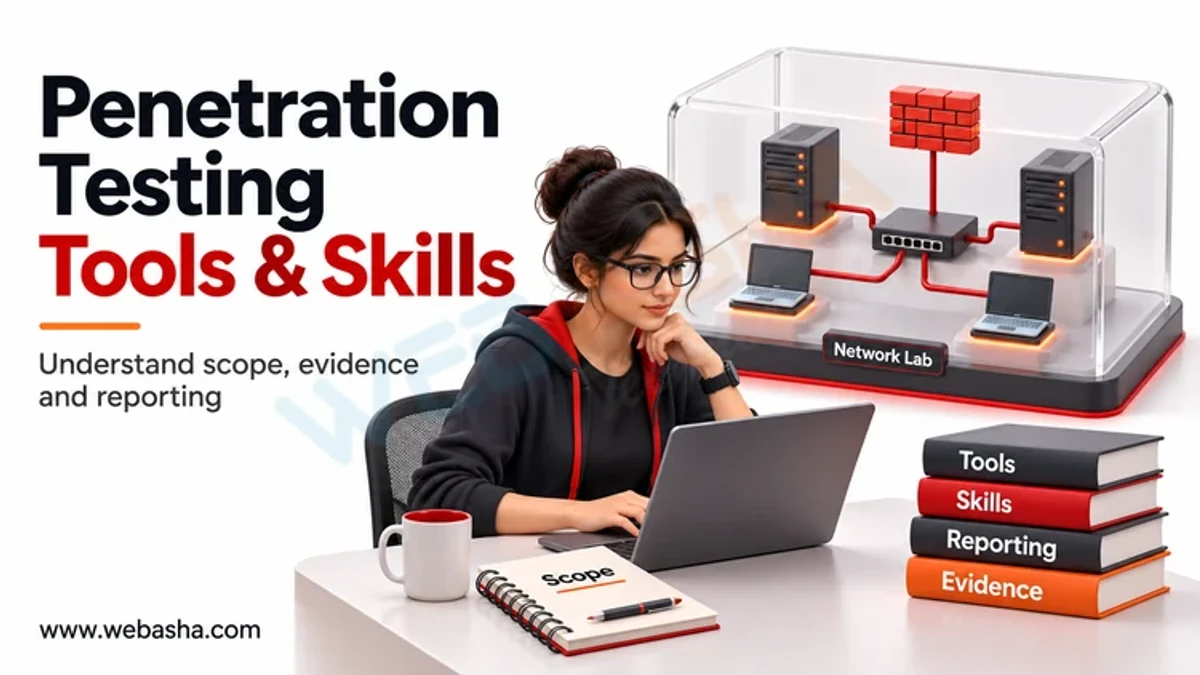
Choose penetration testing tools according to the authorised question you need to answer. Nmap supports network and service observations; Burp Suite and ZAP support web assessment workflows; Wireshark helps inspect captured traffic. Their outputs require interpretation and do not prove that every reported condition is exploitable or that an unreported weakness is absent.

Ethical Hacking Tools: Build a Small, Understandable Workflow

Learn tools by the question each helps answer. Start with networking and HTTP concepts, then choose a small set for an authorised learning environment: reading traffic, understanding a web conversation, organising observations and writing a report. Tool output needs interpretation and scope checks. A detected service is not automatically vulnerable, and a scanner finding is not automatically confirmed.

Kali Linux Shells: Quoting, Interpreters and a Small Safe Script

A command-line shell reads commands and scripts; the terminal is the interface you use to reach it. Kali can involve different shells, so distinguish an interactive default from the interpreter a script needs. This guide uses a report filename containing a space to explain quoting, input and output.

The Kali Linux Kernel: Hardware, Processes and Security Boundaries

The Linux kernel manages the resources and interfaces that Kali applications use, including processes, memory, devices and access checks. Kali adds selected configuration choices and patches for its specialised purpose. A tool being installed does not prove that a required device, driver or platform feature is available.

Aircrack-ng: Plan a Wireless Lab Around Real Capabilities

Aircrack-ng is a suite for assessing aspects of wireless security, with capabilities that depend on the adapter, chipset, driver and operating environment. Before a supervised exercise, decide which observation the lesson requires and whether the lab can actually provide it.

Kali Linux Explained: Choose and Isolate a Learning Environment

Kali Linux is a Debian-based distribution designed for security assessment work. Choose its delivery format according to the task, your host and the required hardware access. For an initial permitted lab, a compatible virtual machine can make reset and separation easier, but its network and sharing settings still matter.

The Top 8 Kali Linux Tools: What Each One Does and How to Start

Eight essential Kali Linux tools are Nmap (network scanning), Wireshark (packet analysis), Burp Suite (web testing), Metasploit (exploit framework), Hydra (online password testing), John the Ripper (offline password audit), Aircrack-ng (Wi-Fi security) and Maltego (OSINT). Use them only on systems you own or are authorised in writing to test.