AI in Red Team Operations: Planning, Emulation and ATT&CK Mapping
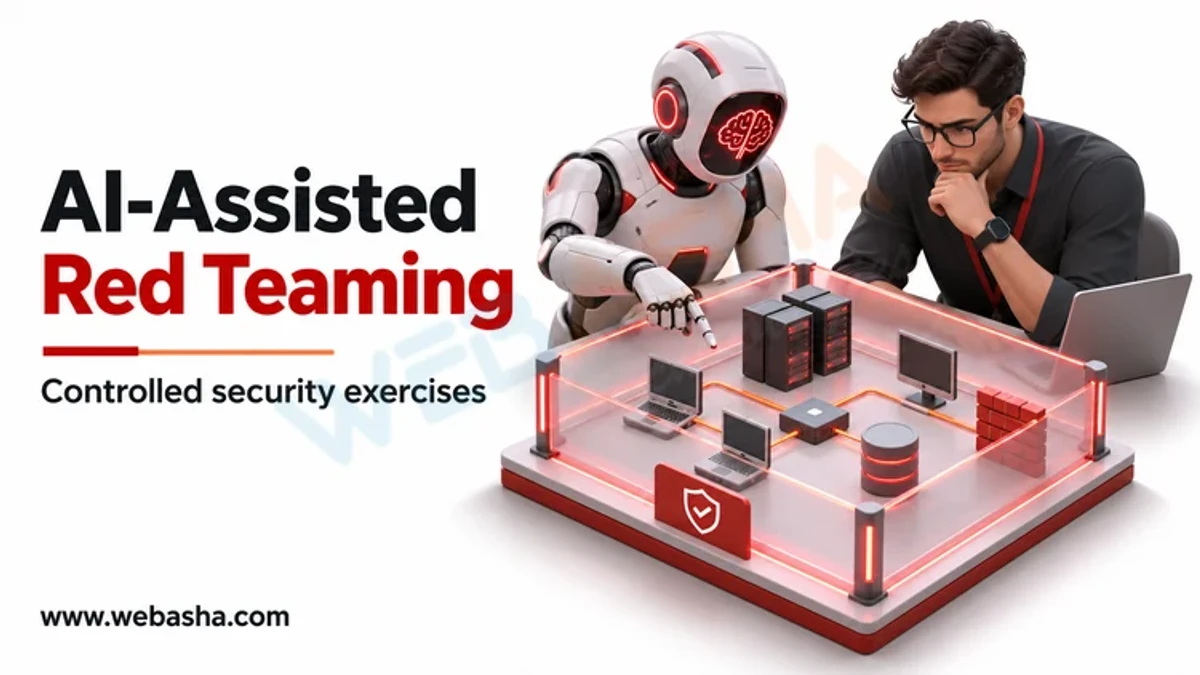
In red team operations, AI is most useful for the work around the attack simulation: turning threat intelligence into realistic scenarios, mapping planned activity to MITRE ATT&CK, helping run approved emulation plans on platforms such as MITRE Caldera, and writing clear reports for defenders. It is far less dependable at the creative, stealthy decision-making a live engagement needs.
Topic: AI in Cybersecurity in Cybersecurity & Ethical Hacking · Explainer
Also covers: Penetration Testing, Ethical Hacking
Quick answer: In red team operations, AI is most useful for the work around the attack simulation: turning threat intelligence into realistic scenarios, mapping planned activity to MITRE ATT&CK, helping run approved emulation plans on platforms such as MITRE Caldera, and writing clear reports for defenders. It is far less dependable at the creative, stealthy decision-making a live engagement needs. Every red team exercise requires written authorisation, agreed rules of engagement, a control group that can stop the test, and logging. AI agents must operate inside those same limits, with a human operator approving each action that touches production.
Key takeaways
- Red teaming tests detection and response, not only vulnerabilities.
- AI speeds up intelligence analysis, planning and reporting.
- ATT&CK gives a shared language for planned and observed activity.
- Emulation platforms automate known techniques in a controlled way.
- Authorisation, a control group and a stop process apply to AI too.
Table of Contents
- How Is Red Teaming Different From Penetration Testing?
- How Can AI Help Plan a Red Team Exercise?
- What Role Does AI Play in Adversary Emulation?
- Why Map Everything to MITRE ATT&CK?
- Where Does AI Fall Short in Live Operations?
- What Controls Should Govern AI in Red Teams?
- References
How Is Red Teaming Different From Penetration Testing?
| Aspect | Penetration test | Red team exercise |
|---|---|---|
| Main goal | Find as many weaknesses as possible | Test whether defenders detect and respond |
| Scope | Defined systems | Objective-based, often wider |
| Defender awareness | Usually informed | Often only a small control group knows |
| Basis | Checklists and methods | Threat intelligence about real adversaries |
NIST SP 800-53 lists red team exercises as an enhancement to penetration testing (CA-8(2)). Frameworks such as TIBER-EU show how regulated sectors run intelligence-led red teaming with formal controls.
How Can AI Help Plan a Red Team Exercise?
- Summarising threat intelligence about groups that target your sector.
- Drafting scenarios that match those groups' known behaviour.
- Listing which ATT&CK techniques each scenario would exercise.
- Highlighting gaps where you have little detection coverage.
- Preparing rules of engagement drafts for legal and management review.
A human lead checks every output, because AI can mix up groups or invent techniques.
What Role Does AI Play in Adversary Emulation?
Adversary emulation replays known attacker behaviour so defenders can test their controls. MITRE Caldera automates this, and the Adversary Emulation Library publishes plans based on public intelligence. AI can help adapt a plan to your environment, explain results and suggest follow-up tests, all within an agreed plan.
Why Map Everything to MITRE ATT&CK?
MITRE ATT&CK describes adversary tactics and techniques in a common format. Mapping lets the red team and blue team compare what was attempted with what was detected.
| Red team output | Blue team use |
|---|---|
| Techniques attempted | Check which alerts fired |
| Techniques missed by detection | Build or tune detection rules |
| Timeline of activity | Measure time to detect and respond |
AI is good at drafting these mappings from operator notes, which speeds up purple team review. For attacks on AI systems themselves, use MITRE ATLAS.
Where Does AI Fall Short in Live Operations?
Live red teaming needs judgement about stealth, timing and safety. AI models can lose track of long operations, misread environments and take actions that are noisy or out of scope. They can also be misled by content planted in target systems. For these reasons, AI is an assistant to operators rather than an operator itself.
What Controls Should Govern AI in Red Teams?
- Written authorisation from someone with authority over every system in scope.
- A control group and a clear process to pause or stop the test.
- Human approval for every AI-suggested action on production systems.
- Complete logs of prompts, actions and results.
- Client data handled under contract and, in India, the DPDP Act 2023.
- Risk records aligned with the NIST AI RMF.
Unauthorised access can be an offence under Sections 43 and 66 of India's IT Act 2000. Read our posts on ethical boundaries in AI hacking and AI tools for red team operations. Ask about our red teaming training.
References
Frequently Asked Questions
What's Your Reaction?
 Like
0
 Dislike
0
 Love
0
 Funny
0
 Wow
0
 Sad
0
 Angry
0

Vaishnavi is a skilled tech professional at the Ethical Hacking Training Institute in Pune, responsible for managing and optimizing the technical infrastructure that supports advanced cybersecurity education. With deep expertise in network security, backend operations, and system performance, she ensures that practical labs, online modules, and assessments run smoothly and securely. Her behind-the-scenes contributions play a vital role in delivering a seamless and secure learning experience for aspiring ethical hackers.