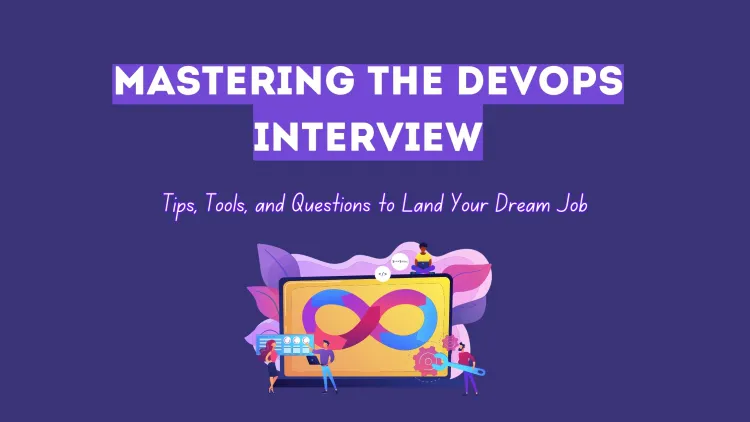
Mastering the DevOps Interview | Essential Tips, Tools, and Questions to Ace Your Next Job Opportunity
This blog covers how to prepare for a DevOps job interview, including understanding core principles, mastering tools, practicing scenarios, and preparing for technical and behavioral questions. Additionally, it provides a list of critical interview questions to help candidates excel in their interviews.
Quick answer: To ace a DevOps interview, know the core principles (automation, collaboration, continuous delivery), and be ready to explain CI/CD, Git, Docker, Kubernetes, infrastructure as code and monitoring. Practise common questions and describe a real project you built. Interviewers value clear reasoning about problems and trade-offs.
Key takeaways
- Know the principles: automation, collaboration and continuous delivery.
- Explain a pipeline you have built.
- Prepare Docker and Kubernetes basics.
The demand for DevOps Engineers has grown significantly as organizations continue to embrace automation, collaboration, and continuous delivery. Preparing for a DevOps job interview involves more than technical knowledge; it also requires showcasing your problem-solving skills, collaboration experience, and understanding of DevOps principles. In this blog, we’ll discuss how to prepare for DevOps job interviews and provide a list of important interview questions to help you ace your next opportunity.
Understand the Core Principles of DevOps
Before attending a DevOps interview, ensure you have a deep understanding of its core principles, including:
- Collaboration: Working closely with development and operations teams.
- Automation: Automating repetitive tasks to save time and reduce errors.
- Continuous Integration and Delivery (CI/CD): Ensuring frequent, error-free deployments.
- Monitoring and Feedback Loops: Tracking performance and addressing issues proactively.
Focus on how these principles lead to faster development cycles, better quality software, and efficient workflows.
Master the Essential DevOps Tools
Employers expect candidates to be proficient in DevOps tools that streamline workflows and processes. Ensure you have hands-on experience with:
- CI/CD Tools: Jenkins, CircleCI, GitLab CI.
- Containerization Platforms: Docker, Kubernetes.
- Infrastructure as Code (IaC): Terraform, Ansible, Chef, Puppet.
- Monitoring and Logging: Prometheus, Grafana, ELK Stack.
- Cloud Platforms: AWS, Azure, Google Cloud Platform (GCP).
Gain Hands-On Experience
Practical experience is critical. Set up personal or collaborative projects to demonstrate your skills. Examples include:
- Building and deploying a CI/CD pipeline using Jenkins.
- Deploying and managing containerized applications using Kubernetes.
- Writing Infrastructure as Code scripts with Terraform or Ansible.
- Monitoring application performance using Prometheus and Grafana.
Learn the Most Common DevOps Practices
Be familiar with the methodologies and best practices that underpin DevOps, such as:
- Agile and Scrum frameworks: Collaboration and iterative development.
- GitOps: Managing infrastructure using Git repositories.
- DevSecOps: Integrating security into DevOps workflows.
Prepare for Behavioral Questions
DevOps is as much about mindset as it is about technical expertise. Interviewers often assess your ability to:
- Collaborate effectively with cross-functional teams.
- Handle conflicts or challenges in a fast-paced environment.
- Drive improvements in existing workflows.
Be ready to share examples of projects where you improved team efficiency or resolved issues.
Be Ready for Problem-Solving Challenges
Interviewers may present real-world scenarios to test your approach to troubleshooting and problem-solving. For example:
- "How would you handle a situation where your CI/CD pipeline fails?"
- "What steps would you take to ensure a smooth application deployment?"
Revise Key Concepts
Brush up on foundational topics to ensure you’re confident during technical discussions:
- Version Control Systems: Git commands, branching, and merging strategies.
- Networking Basics: Understanding DNS, HTTP/HTTPS, firewalls, and load balancers.
- Scripting Languages: Python, Bash, or PowerShell for automation.
Build a DevOps Portfolio
Create a portfolio showcasing your projects, contributions to open-source tools, and personal achievements. Use platforms like GitHub to share:
- Sample Infrastructure as Code templates.
- CI/CD pipeline configurations.
- Kubernetes manifests and deployment scripts.
Practice Mock Interviews
Mock interviews help you familiarize yourself with potential questions and refine your responses. Practice both technical and behavioral questions to gain confidence.
Important Questions for a DevOps Interview
Here are some critical questions that interviewers might ask:
Technical Questions
- What is CI/CD, and why is it important?
- Explain the differences between Docker and Kubernetes.
- How does Infrastructure as Code (IaC) improve DevOps workflows?
- What are the key components of a successful monitoring system?
- How would you troubleshoot a failed application deployment?
- What is the difference between Ansible, Chef, and Puppet?
- Explain how Git works and describe your experience with branching strategies.
- What are the advantages of using container orchestration platforms like Kubernetes?
- How would you handle secrets management in a DevOps pipeline?
- Describe the DevOps lifecycle and the tools used at each stage.
Behavioral Questions
- Describe a challenging DevOps project you worked on and how you resolved the issues.
- How do you approach collaboration between development and operations teams?
- Share an example of how you automated a task to improve efficiency.
- How do you handle situations where priorities conflict between teams?
Bonus Tips
- Stay Updated: Follow blogs, attend webinars, and participate in forums to learn about new DevOps trends and tools.
- Certifications: Certifications like AWS Certified DevOps Engineer or Docker Certified Associate can set you apart.
- Networking: Attend DevOps meetups and connect with industry professionals.
Conclusion
Preparing for a DevOps job interview involves more than memorizing tools and concepts. Employers look for professionals who can combine technical expertise with problem-solving and collaboration skills. By mastering tools, gaining hands-on experience, and preparing for common questions, you can confidently showcase your capabilities and land your dream role in DevOps.
To take this further with guided labs and an instructor, see our DevOps course in Pune.
Related reading
- How to Become a DevOps Engineer in Just 6 Months | Complete Step-by-Step Roadmap with Tools and Projects
- What Is DevOps? A Complete Beginner's Guide
- What Does It Take to Be a DevOps Engineer – Essential Skills You Need Today
Reference
For the authoritative details, see Kubernetes documentation.
Frequently Asked Questions
What's Your Reaction?
 Like
0
Like
0
 Dislike
0
Dislike
0
 Love
0
Love
0
 Funny
0
Funny
0
 Wow
0
Wow
0
 Sad
0
Sad
0
 Angry
0
Angry
0

Vaishnavi is a skilled tech professional at the Ethical Hacking Training Institute in Pune, responsible for managing and optimizing the technical infrastructure that supports advanced cybersecurity education. With deep expertise in network security, backend operations, and system performance, she ensures that practical labs, online modules, and assessments run smoothly and securely. Her behind-the-scenes contributions play a vital role in delivering a seamless and secure learning experience for aspiring ethical hackers.

![Top 10 Famous Ethical Hackers in India [Updated 2026]](https://www.webasha.com/blog/uploads/images/202608/image_450x280_b3317756e192c8d5e1fb674259f1a0c3.jpg)






![Top 10 Famous Ethical Hackers in India [Updated 2026]](https://www.webasha.com/blog/uploads/images/202608/image_140x98_da23f65c290cfbf1237d77aec58a2f0f.jpg)