Welcome!

Unlock your personalized experience.
Sign Up
Tag

Adversarial AI Articles, Guides & Tutorials

18 posts Page 1 / 2

Can AI Predict Cyber Attacks? The Limits of Base Rates and Alerts

AI can estimate which vulnerabilities are likely to be exploited, which assets are most exposed and which activity looks unusual, but it cannot reliably predict a specific attack before it happens. The main obstacle is the base rate: real attacks are rare compared with normal events, so even an accurate model produces many more false alarms than true detections.
How Effective Is AI in Threat Hunting? Metrics That Show It

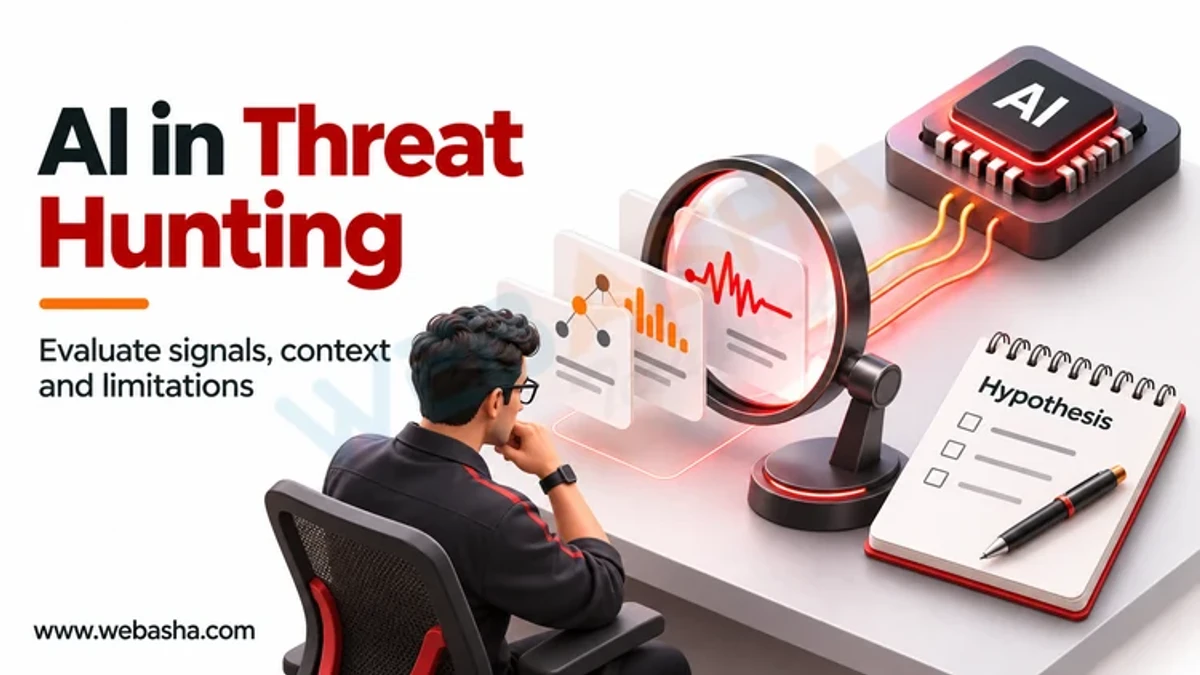
AI threat hunting is effective only when you can show it with numbers from your own environment. Measure outcomes, not activity: how many hunts found real threats or security gaps, how many new detections they produced, how much ATT&CK technique coverage improved, how fast threats were found and contained, and how many analyst hours were saved. Also track precision and the false positive load AI leads create.

AI-Driven Exploitation: How Dangerous Is It, Based on the Evidence?

AI-driven exploitation is a real and growing risk, but the public evidence shows it speeding up existing work rather than creating unstoppable attackers. In DARPA's AI Cyber Challenge final in August 2025, automated systems found and patched many planted bugs and also found 18 real vulnerabilities. Google's Big Sleep agent has found real memory-safety flaws in SQLite.

AI in Red Team Operations: Planning, Emulation and ATT&CK Mapping

In red team operations, AI is most useful for the work around the attack simulation: turning threat intelligence into realistic scenarios, mapping planned activity to MITRE ATT&CK, helping run approved emulation plans on platforms such as MITRE Caldera, and writing clear reports for defenders. It is far less dependable at the creative, stealthy decision-making a live engagement needs.

Offensive AI: How Attackers Use AI and How Defenders Respond

Attackers mainly use AI to do familiar things faster and more convincingly: writing fluent phishing and fraud messages, cloning voices and faces for impersonation, researching targets, and troubleshooting code. Threat reports from Google and OpenAI describe productivity gains rather than new attack methods. AI applications are also new targets, through prompt injection and data leakage.

Pros and Cons of Security Automation: SOAR Playbooks and Failure Modes

Security automation, usually delivered through SOAR (security orchestration, automation and response) playbooks and AI-assisted triage, brings speed, consistency and relief from repetitive alert handling. Its downsides are just as real: a bad rule can block legitimate users at machine speed, integrations break silently, AI triage can be misled by crafted input, and playbooks go stale as systems change.

Which Cybersecurity Tasks Should You Automate First?

Automate first the security tasks that are frequent, repetitive, low risk if they go wrong and easy to measure. For most organisations that order is: asset inventory, patching of known exploited vulnerabilities, log collection, alert enrichment and first-pass triage, then routine reporting. These tasks consume analyst time every day and follow clear rules, so automation gives quick, visible gains.

How AI Strengthens Dark Web Threat Intelligence for Defenders

AI strengthens dark web threat intelligence by doing the slow parts of the job at scale. It translates posts in many languages, removes duplicates, pulls out entities such as company names, domains and email addresses, groups related posts, and ranks findings so analysts see the most relevant ones first.

Dark Web and AI Cyber Risks: A Risk Assessment for Organisations

To assess dark web and AI risks, treat them as a threat model like any other. List what criminals would want from you: credentials, customer data, payment flows and access. Then map how AI changes each scenario: more convincing phishing and deepfake requests, faster exploitation of known flaws, quicker resale of leaked data, and attacks on your own AI tools.

Is AI Strengthening or Weakening Your Security? Metrics to Track

Whether AI is strengthening or weakening security depends on your organisation, and you can measure it. Track two sides. On the defensive side, measure time to triage and contain incidents, detection coverage against MITRE ATT&CK techniques, false positive rate and analyst rework of AI output.

AI vs Human Hackers: Strengths, Limits and Why Combining Works

Neither side simply wins. AI systems are fast, tireless and good at repetitive work such as sorting scan output, summarising logs and drafting reports. Human hackers bring context, judgment, creativity and legal accountability, which matter most for business logic flaws, chained attacks and deciding what is safe to test.