Welcome!

Unlock your personalized experience.
Sign Up
Tag

OSCP certification Articles, Guides & Tutorials

14 posts

OSCP vs CPENT: Comparing Two Practical Penetration Testing Exams

OSCP, from OffSec, and CPENT, from EC-Council, are both hands-on penetration testing certifications with long proctored exams and a written report. The OSCP exam lasts 23 hours and 45 minutes, needs 70 of 100 points, and the report is due within 24 hours. CPENT, now marketed as CPENT AI, runs 24 hours, in one sitting or two 12-hour sessions, with a report due within seven days.

Ethical Hacker and Penetration Tester: Role, Skills and Certifications

An ethical hacker is a security professional who looks for weaknesses in systems with the owner's permission, so they can be fixed before criminals find them. A penetration tester does this inside a formal engagement with a written scope, rules of engagement and a final report. The two titles overlap heavily.

Websites to Learn Ethical Hacking Online: Free and Paid Labs Compared

Six websites cover most of what a beginner needs to practise ethical hacking legally. TryHackMe offers guided rooms with a limited free plan and paid plans. PortSwigger Web Security Academy teaches web security with labs and states that it is free. Hack The Box Academy has free registration with paid certifications.

Technical Skills for Ethical Hackers and How to Practise Each One

An ethical hacker needs four technical skill areas. Networking: addressing, ports, DNS and how TCP and HTTP behave. Operating systems: users, permissions, services and logs on Linux and Windows. Web applications: how requests, sessions and databases work, and the weakness classes in the OWASP Top 10. Scripting: enough Bash, PowerShell or Python to automate a task and read other people's code.

Which Ethical Hacking Certification to Start With: A Decision Guide

There is no single right first certification; it depends on your situation. If you have no security background, start with a foundation such as CompTIA Security+. If you want a hands-on, practical first exam, INE's eJPT is built for junior testers. If you want a vendor-neutral exam that covers the whole testing process, including planning and reporting, look at CompTIA PenTest+ (PT0-003).

Ethical Hacking Certifications for Beginners: How to Choose

Choose an ethical hacking certification by your current foundations, the assessment method and the work you want to practise. A general entry-level cybersecurity credential can help a complete beginner organise learning, while a practical penetration testing assessment expects more applied preparation. Compare official objectives and eligibility before paying.

Can You Become an Ethical Hacker Without a Degree?

A degree is not a universal requirement for learning ethical hacking or for every cybersecurity job, but individual employers can make education a mandatory hiring condition. If you do not have a degree, check actual vacancies, build computing foundations and produce honest evidence through authorised projects.

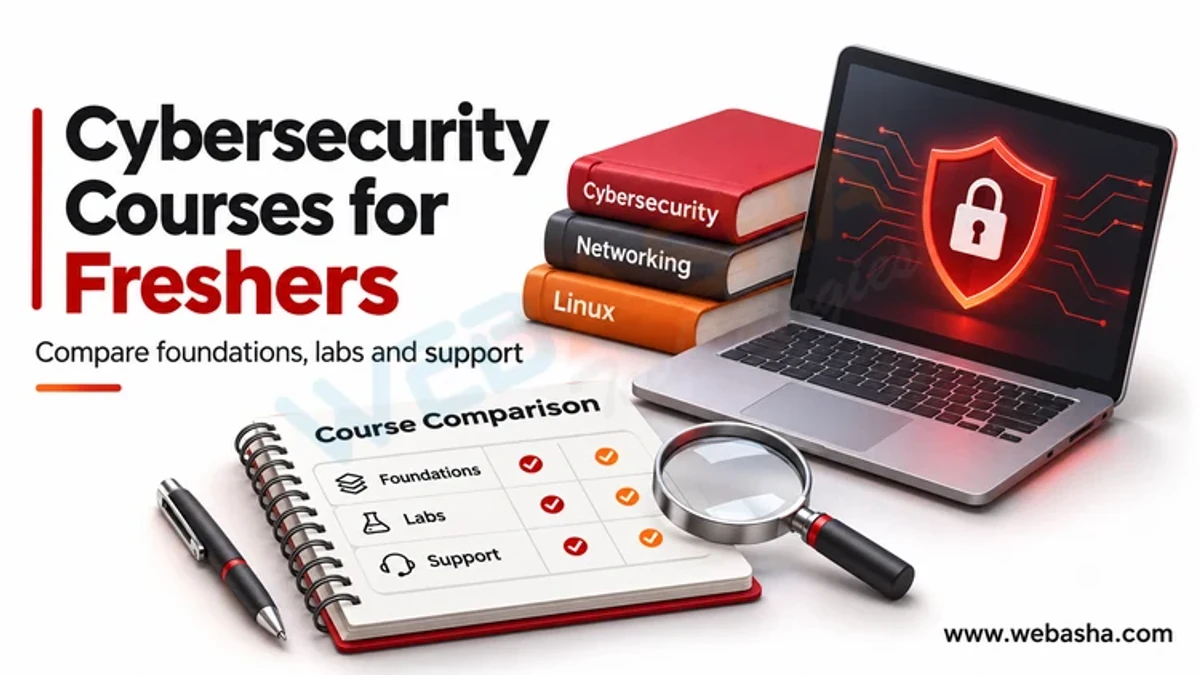
Choosing a Cybersecurity Course as a Fresher

Choose a fresher cybersecurity course by comparing its starting assumptions, practical tasks and feedback with the work you want to explore. Ask for a sample lesson and a reviewed exercise, not only a certificate logo or tool list. A foundation course, an analyst course and a penetration-testing programme need different prerequisites and assessments.

OSCP and OSCP+: Understand the Exam Changes and Current Rules

OSCP is OffSec's practical penetration-testing credential, and passing the updated examination awards OSCP and OSCP+. OSCP does not expire; OSCP+ has a three-year validity cycle. Keep the November 2024 introduction of the plus designation separate from later policy updates. OffSec has announced equated scaled scoring for exams starting on or after 1 December 2026 at 08:00 GMT.

Ethical Hacking Courses: Match Objectives to Your Starting Skills

Choose an ethical hacking course by the work you need to learn, your existing foundations and the issuer's current assessment and eligibility rules. A broad security credential, a practical penetration-testing programme and an experienced-professional certification serve different purposes. Compare course access, lab arrangements and examination costs separately.

Ethical Hacking Courses: Check the Package Before Enrolling

An ethical hacking course supplies instruction and practice; a certification is awarded under an issuer's assessment and certification rules. Before enrolling, identify the exact course, exam, access periods and account arrangements in writing. Compare those details with current issuer documentation rather than relying on a bundle name or a list of logos.

OSCP Interview Questions on Method and Reporting

OSCP-related interview practice should explain how you reason, respect scope and produce useful evidence. The thirty original questions below use an authorised lab-report review: a service observation was incorrectly written as proof of administrative access. Correct the claim before proposing another test.

CPENT and LPT (Master): Score Rules and Ethical Preparation

EC-Council links strong CPENT results to LPT (Master), but its public pages contain conflicting threshold and pass-score wording. The current CPENT AI FAQ says 90% and above for CPENT plus LPT, while an exam-details section says more than 90%. Confirm the applicable exam form, award conditions and written policy before relying on an exact boundary.