SOC Analyst Roadmap: Skills, Tools and Labs for Your First Role
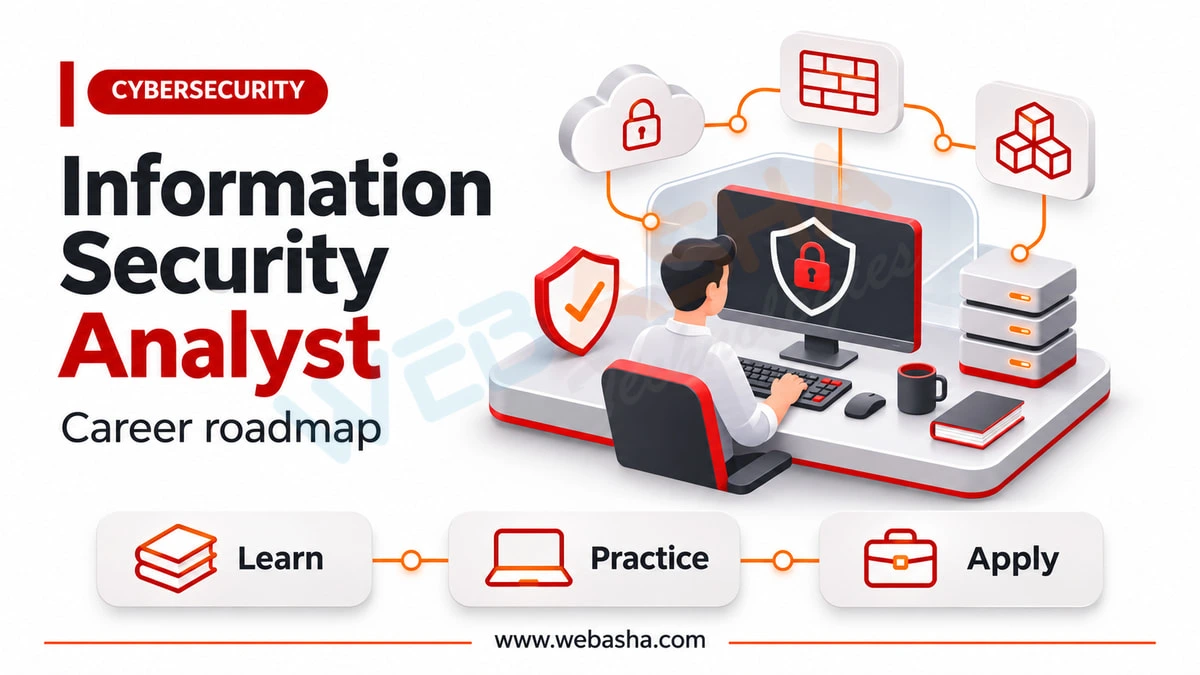
Begin a SOC analyst roadmap with networking, operating systems and log interpretation, then practise investigating small alerts and documenting the decision. Learn tools through specific evidence tasks and review your work with another person. Move to a harder case when you can explain the source, method and limitations of the one you have completed.
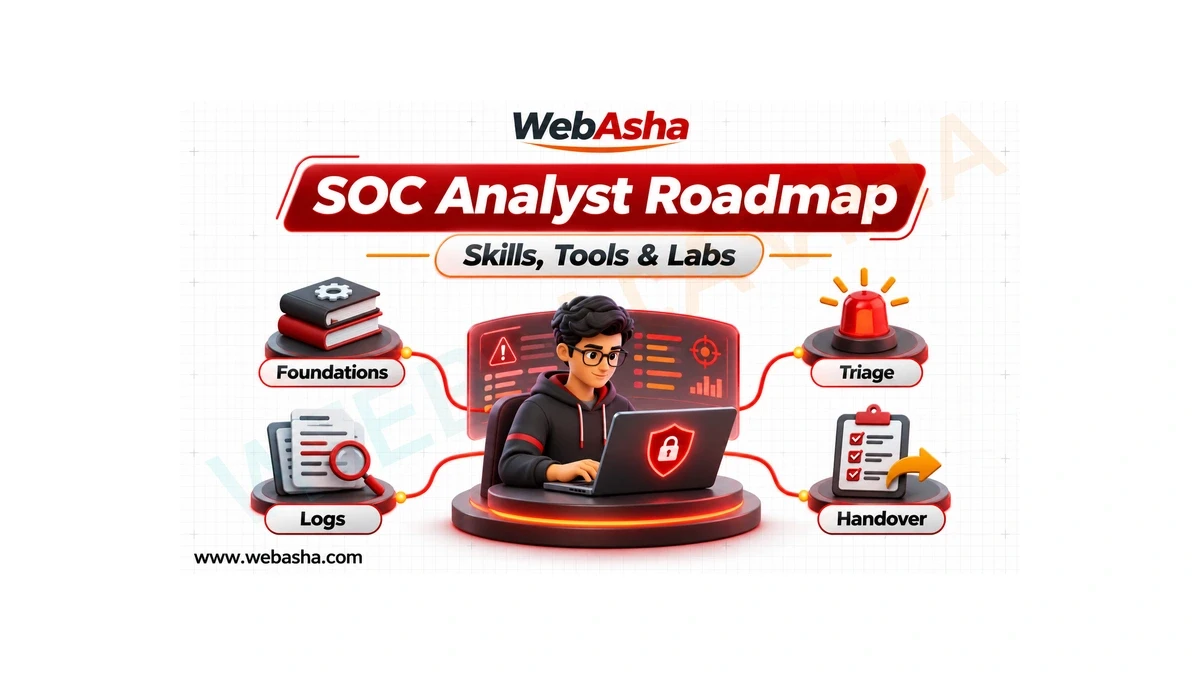
Begin a SOC analyst roadmap with networking, operating systems and log interpretation, then practise investigating small alerts and documenting the decision. Learn tools through specific evidence tasks and review your work with another person. Move to a harder case when you can explain the source, method and limitations of the one you have completed.
This is an editorial learning route, not a fixed-duration course or a hiring standard. Technical references were checked on 17 November 2026. The suggested labs are exercise briefs; no tenant, endpoint or training dataset was investigated while preparing the article.
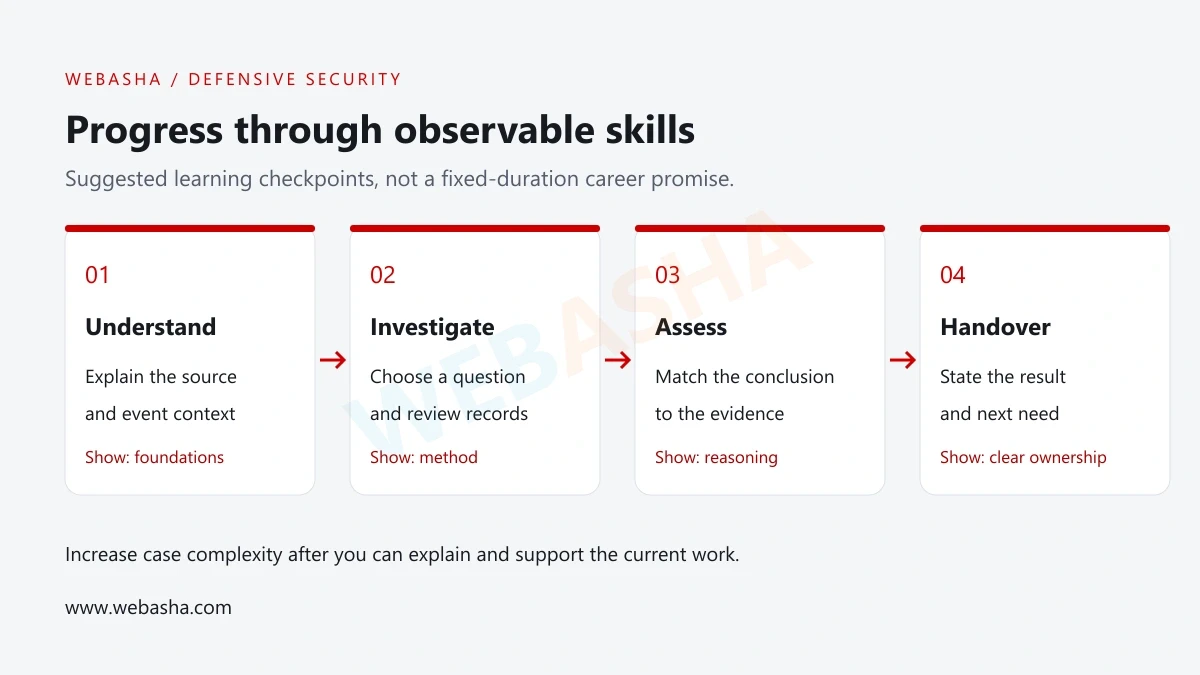
Use observable work to guide progress
- Understand the event before relying on an alert label.
- Choose a tool to answer a defined question.
- Keep investigation, escalation and response authority clear.
- Collect reviewed case notes as evidence of learning.
Choose a starting point based on tasks
Review the work you can already demonstrate. A system administrator may understand accounts and services but need practice explaining alert evidence. A new learner may first need to understand the records those alerts depend on. Both can use the same checkpoints at a different pace.
NIST’s NICE Framework distinguishes Task, Knowledge and Skill statements, with skills expressed as observable actions. Use that vocabulary to make your learning goals concrete; it does not establish a universal job description. [1]
| Question | Useful evidence |
|---|---|
| Can I explain a network request? | A labelled request flow with DNS, addresses and service context. |
| Can I explain a system record? | A note identifying account, host, action and time. |
| Can I find relevant records? | A search with stated fields, window and assumptions. |
| Can I justify a next step? | A case note linking a decision to evidence. |
| Can someone review my work? | A traceable report with sources and limitations. |
If several rows are unfamiliar, begin with small foundation exercises. The WebAsha beginner cybersecurity guide offers broader starting context.
Phase 1: learn the context behind the logs
Study networking concepts such as addressing, DNS, common protocols and the role of a firewall or proxy. Pair each concept with a simple record or diagram so you can explain what it describes.
For Windows and Linux, learn accounts, permissions, processes and services. Then inspect sample records from a permitted training source. Identify the original timestamp, relevant identifiers and any fields whose meaning you have not confirmed.
Suggested checkpoint: explain one record in plain language and state one thing it does not establish. If you cannot interpret a field, consult the relevant source documentation before building a detection around it.
Keep a short glossary in your notes. Writing “authentication succeeded for this account in the supplied log” preserves more useful context than jumping immediately to “the user was safe” or “the account was compromised.”
Phase 2: learn a small tool set through evidence questions
Start with one investigation environment or a small set of supplied exports. Use a tool because it supports a task you can describe. Installation and dashboard screenshots alone are limited evidence of investigation ability.
| Category | Example | Question to practise |
|---|---|---|
| SIEM | Microsoft Sentinel or the approved training platform. | Which records support this alert condition? |
| Endpoint investigation | The endpoint product available in the lab. | Which process and device observations are relevant? |
| Packet inspection | Wireshark with a documented sample capture. | Which exchanges are visible in this capture? |
| Record organisation | A table editor or a small script. | Can I summarise known fields without losing their context? |
Microsoft Sentinel documents data connectors, normalisation, analytics and investigation features. Defender for Endpoint documents behavioural telemetry and alert/incident investigation. Wireshark supplies a user guide and display-filter reference. These are named examples; check the documentation for the product and source you actually use. [2] [3] [4]
Suggested checkpoint: show the input, your search or review method and the record supporting the result. Explain how a different filter or missing source could change the view.
Phase 3: practise alert triage with incomplete context
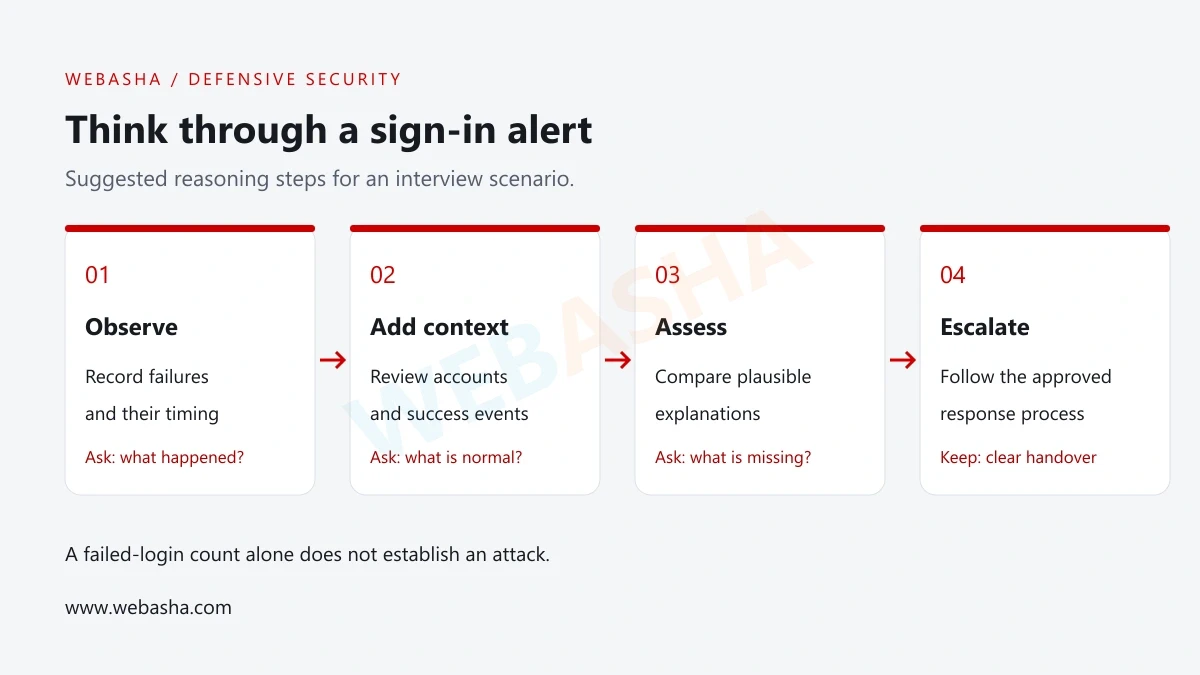
For a small synthetic case, identify the triggering condition, affected entities and relevant time window. Review supporting records and note which questions remain open. A conclusion should be no stronger than the evidence behind it.
Try an authentication case with repeated failures and a later success. Include the account purpose and source context only when the exercise supplies them. Ask whether the records support a particular explanation or merely show a pattern needing further review.
Microsoft cautions that Defender for Endpoint detection is not a complete audit log of every endpoint operation. That product-specific limit is a reminder to inspect source coverage before treating missing output as proof that an action did not occur. [3]
Suggested checkpoint: write a note that separates observed facts, possible explanations and the next approved check. Have a reviewer change an assumption and explain how your next step changes.
Three suggested labs for the roadmap
Lab 1: a field dictionary and data-quality review
Use a small synthetic table with account, device, event outcome and time fields. Define each field and inspect duplicate, missing and unknown values. Record whether the source times are directly comparable.
Output: a field dictionary and a short list of assumptions that would affect a search. The objective is to understand the data before interpreting an alert.
Lab 2: a bounded investigation
Use approved training records and a stated question. Select the relevant entities and time window, then preserve the meaningful results. Include a known record that should match and one that should not, and explain both outcomes.
Output: a query or filter note, supporting records and a qualified assessment. Do not claim production detection or response work when the exercise used exported data.
Lab 3: a case handover
Take the completed investigation and write a concise handover. Identify the observation, checks performed, remaining question and responsible next owner. Distinguish an action proposal from anything actually performed.
Output: a case note that a second reader can use without reconstructing every step. These labs are editorial proposals, not claims about a specific course package or completed experiment.
Phase 4: understand response decisions and recovery
NIST SP 800-61 Revision 3 integrates incident response with Cybersecurity Framework 2.0 risk management. It supersedes Revision 2 and places preparation, detection, response and recovery in that broader context. [5]
For beginner practice, propose a response and explain its authority, expected effect and possible disruption. A visible isolation button does not establish that you may use it on an organisational device. Follow the exercise’s boundaries and the responsible team’s process.
Discuss how the next person would verify recovery or a corrected control. Closing a case requires an explanation of what was checked and what remains unresolved, not simply the disappearance of an alert.
Suggested checkpoint: present a response proposal with a clear owner and verification question. If authority or evidence is missing, identify the specific escalation need.
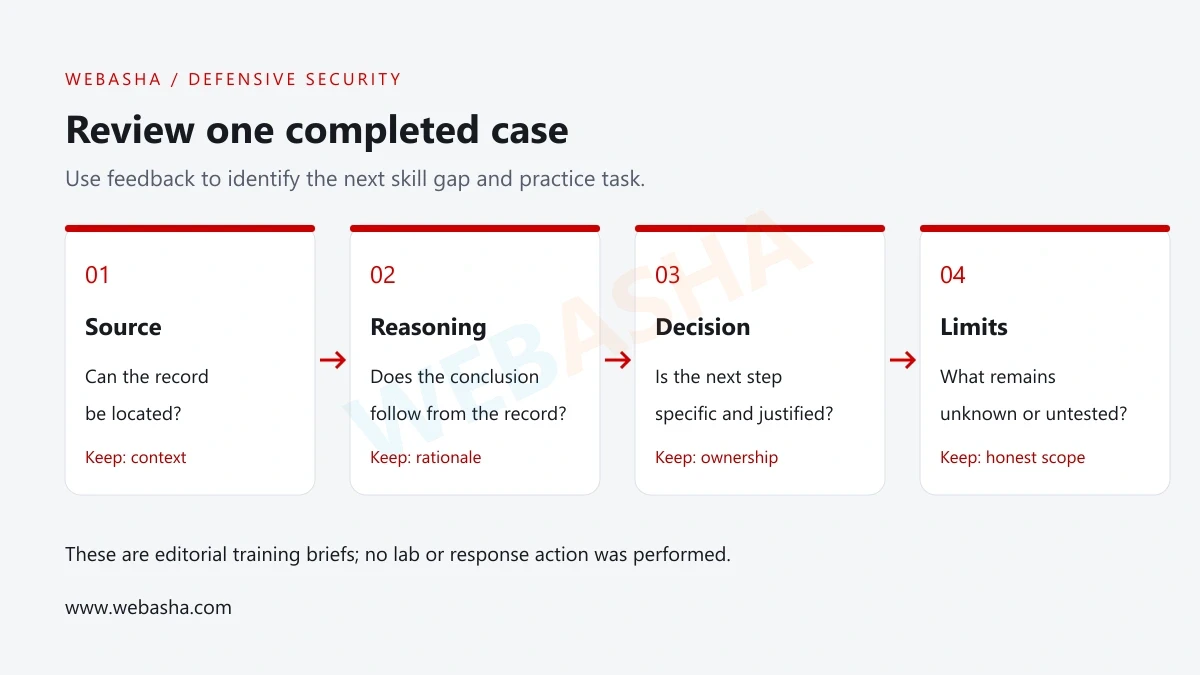
Phase 5: build a small set of reviewed case notes
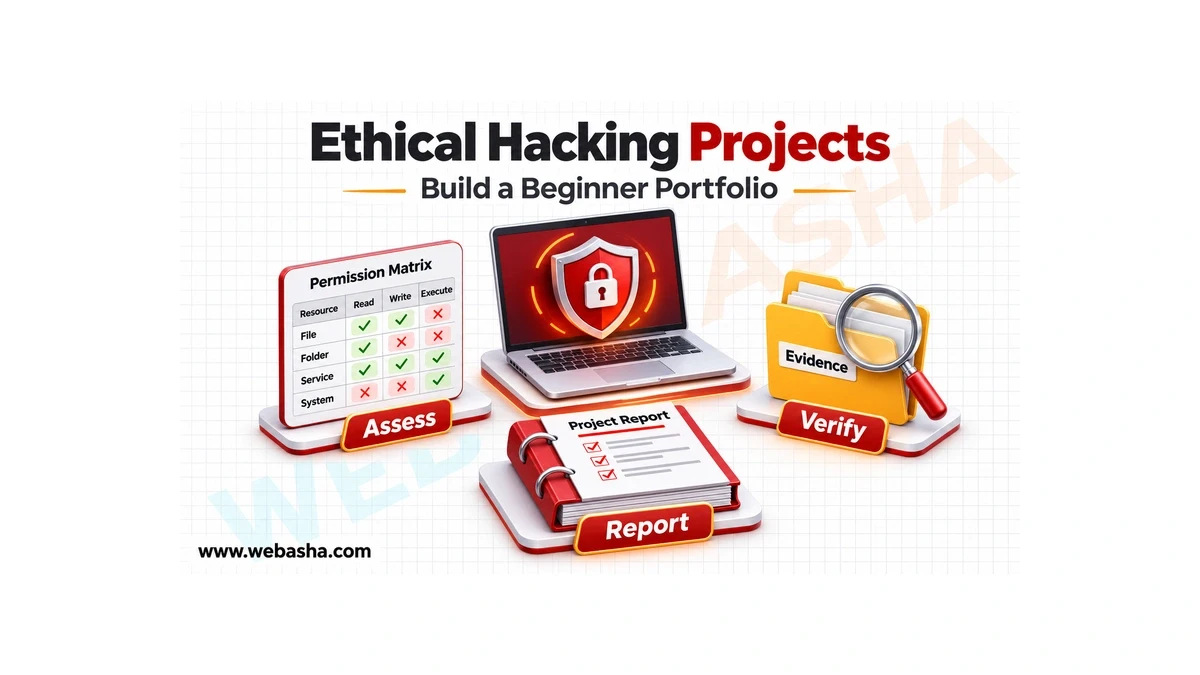
Keep one complete write-up before collecting several partial screenshots. Include the question, source context, method, observations, interpretation and limitations. State your contribution if the exercise was shared.
| Check | Question for the reviewer |
|---|---|
| Source | Can the supporting record be located? |
| Method | Are the search or review assumptions clear? |
| Reasoning | Does the conclusion follow from the observations? |
| Uncertainty | Are missing sources and alternatives stated? |
| Next action | Is the request or closure rationale specific? |
| Scope | Is training work labelled accurately? |
Correct a weak report while the source is still available. The WebAsha beginner portfolio guide can help present permitted learning evidence without exposing private records or restricted walkthroughs.
Connect skills to role requirements and learning choices
Read actual role requirements and compare them with your completed tasks. Use the WebAsha SOC analyst skills guide for context, then check the employer’s own duties and prerequisites.
A certification or training path can organise study, but course completion and demonstrated task performance are different records. Confirm the issuer’s actual syllabus, assessment and credential status before choosing an exam. This roadmap does not prescribe a compulsory certificate ladder.
When describing work on a resume, use the task and output you actually completed. Practise explaining one case aloud, including a failed assumption and the observation that changed your view.
Suggested checkpoint: identify a role requirement you can support and a gap you still need to address. Use that gap for the next exercise rather than inventing experience.
Set a pace and troubleshoot common stalls
Choose study sessions you can sustain, and end each one with a small output: an explained field, a reviewed query or a clearer note. Review progress after meaningful work rather than treating a universal month count as evidence of readiness.
If queries seem confusing, reduce the dataset and manually inspect a few known records. If alerts feel ambiguous, write the missing question before trying another tool. If reports become long, move supporting detail into an appendix and make the main decision easier to follow.
Automation and AI can assist with drafting or organisation when the exercise permits them. Check generated output against source records, preserve private-data boundaries and be able to explain the final work independently.
Do not use a training roadmap as authority to test a public target or act on a live endpoint. Use explicitly permitted sources and environments that fit the learning task.
Discuss a SOC learning plan with WebAsha
Bring your starting checklist and a permitted case note to a training discussion. Ask how supervised labs, feedback and reporting practice address the gaps you have identified.
Ask WebAsha Technologies about SOC analyst training and practical case review. Contact WebAsha with your foundation skills and learning goals.
Official references
Frequently Asked Questions
What's Your Reaction?
 Like
0
 Dislike
0
 Love
0
 Funny
0
 Wow
0
 Sad
0
 Angry
0

With a passion for staying on the cutting edge of technology trends, I am dedicated to delivering content that not only informs but also inspires. Whether you need in-depth analysis pieces, informative guides, or thought-provoking opinion pieces, I craft content that resonates with tech enthusiasts and professionals alike.