SOC Analyst Projects for Beginners: Build a Blue Team Portfolio
Start with SOC analyst projects for beginners that answer a small evidence question and end in a readable case note. Use synthetic or explicitly permitted data, record what you checked and state what remains unknown. A blue team portfolio becomes easier to assess when each project includes its source context, method and supported conclusion.
Start with SOC analyst projects for beginners that answer a small evidence question and end in a readable case note. Use synthetic or explicitly permitted data, record what you checked and state what remains unknown. A blue team portfolio becomes easier to assess when each project includes its source context, method and supported conclusion.
The project briefs below are editorial learning suggestions. The small Python exercise uses synthetic in-memory data; its local verification is recorded with this article. No public system, organisational tenant or real incident was investigated.
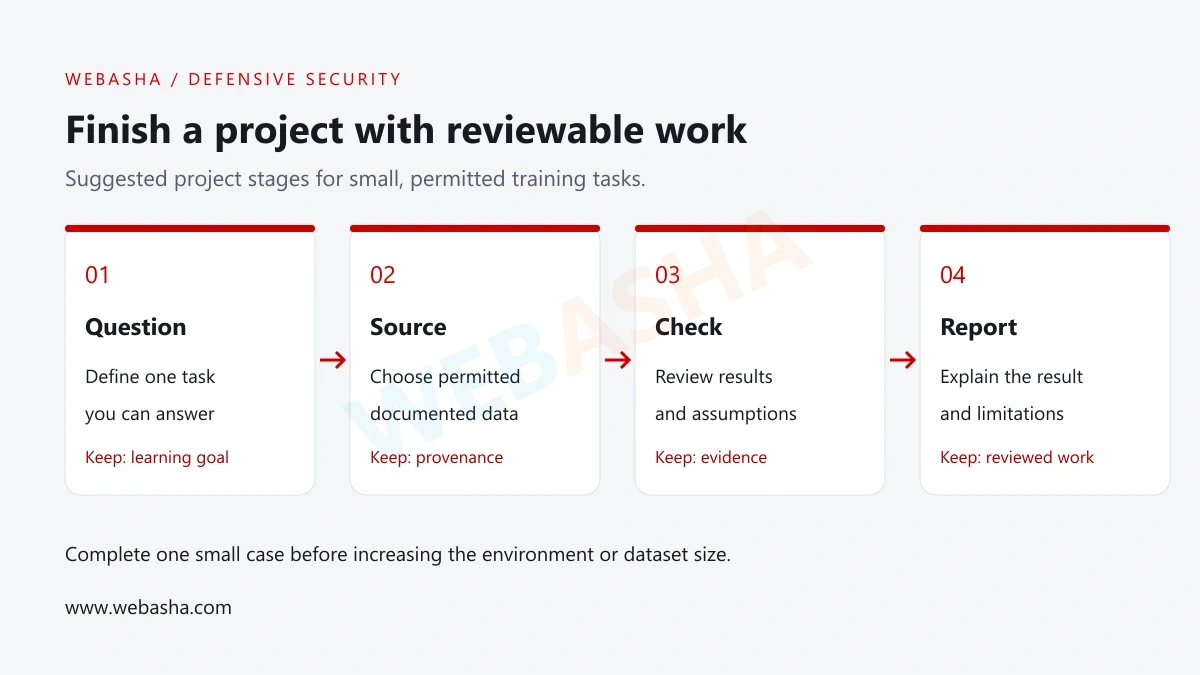
Finish a project with evidence someone can review
- Define one question before choosing a tool.
- Keep source and method details with the result.
- Check both intended matches and non-matches.
- Describe training work accurately in your portfolio.
Choose a project you can complete and explain
| Project | Input | Deliverable |
|---|---|---|
| Authentication log summary | A synthetic CSV with known outcomes. | A verified count and an interpretation note. |
| Packet review | A permitted documented sample capture. | A source-linked connection summary. |
| SIEM investigation | Approved sample records in a training environment. | A query note and triage decision. |
| Detection rule review | A benign training rule and labelled test records. | A match/non-match review with assumptions. |
| Endpoint timeline | Supplied synthetic process and device records. | An annotated timeline with missing context labelled. |
| Case handover | A completed small learning case. | A concise escalation or closure rationale. |
Complete one small case before building a large lab. If you cannot explain an output field, reduce the task and revisit the concept behind it. The WebAsha beginner cybersecurity guide can help with that foundation work.
Define the data and permission boundaries
Use deliberately created synthetic records or a documented dataset whose permitted uses fit the exercise. Keep its title, provider, URL, relevant instructions and any supplied integrity information in your notes. Do not publish raw organisational logs or client records as portfolio material.
NIST’s Computer Forensic Reference Data Sets project provides documented simulated evidence that can support comparison with known contents. Review the specific dataset description; a project portal does not establish that every collection suits every learning task. [4]
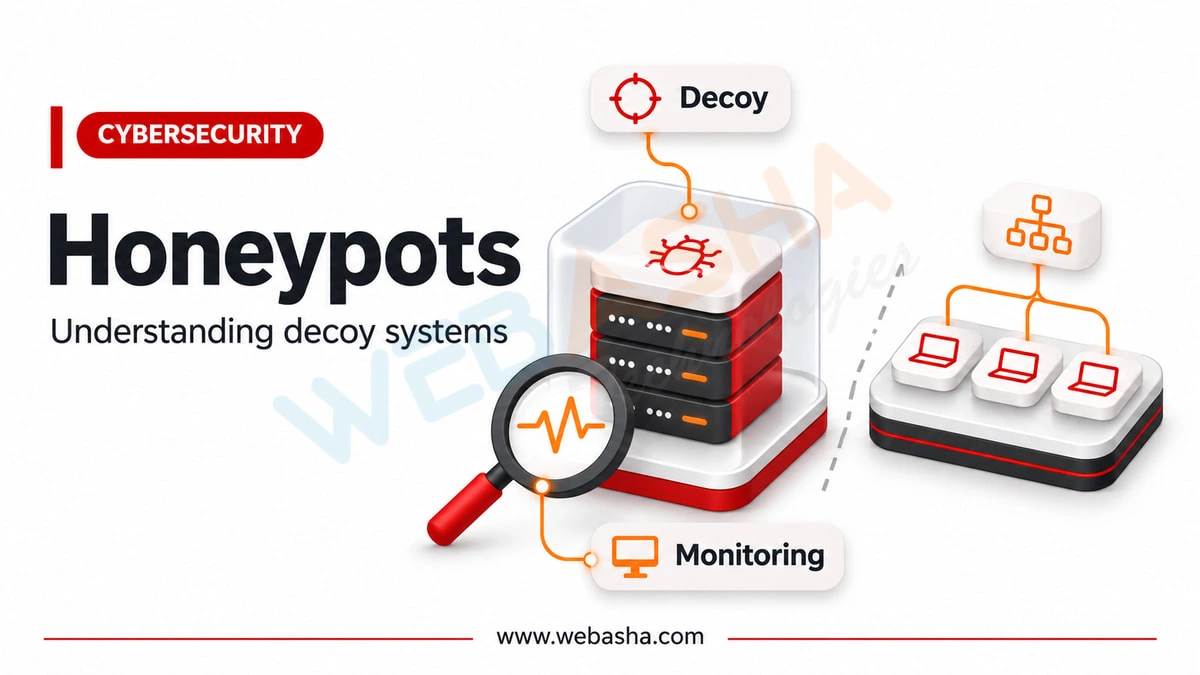
Some training data may include unsafe content. Follow the provider’s handling instructions in a suitable learning environment. These projects do not require exposing a honeypot, generating attacks or opening suspicious attachments.
Project 1: summarise synthetic authentication records
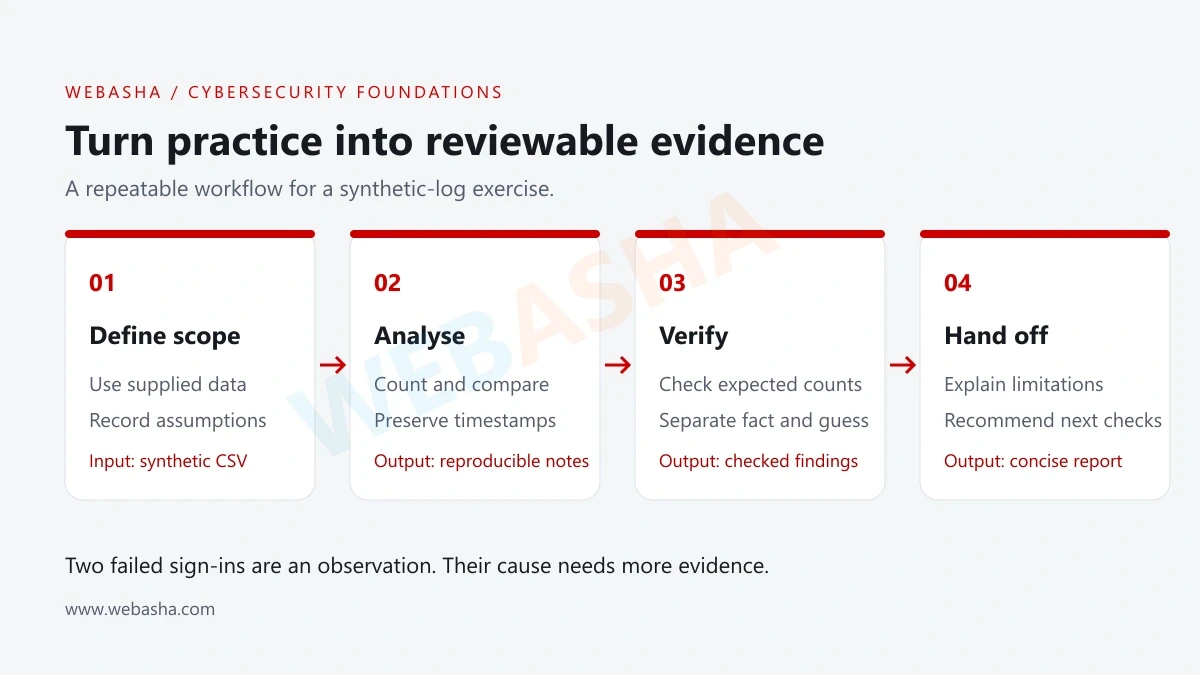
Question: how many rows explicitly record a failure for each account, and which outcomes remain unclassified? The exercise reads only the embedded CSV below. It does not authenticate anywhere or access your logs.
Python’s standard csv module provides DictReader for reading rows using field names. This example keeps unrecognised outcomes separate instead of silently counting them as failures. [5]
import csv
from collections import Counter
from io import StringIO

data = """account,result
LAB-A,success
LAB-A,failure
LAB-B,failure
LAB-A,failure
LAB-C,success
LAB-B,unknown
"""
counts = Counter()
unclassified = 0
for row in csv.DictReader(StringIO(data)):
    if row["result"] == "failure":
        counts[row["account"]] += 1
    elif row["result"] != "success":
        unclassified += 1
for account in sorted(counts):
    print(f"{account}: {counts[account]} failures")
print(f"Unclassified rows: {unclassified}")
Expected output: LAB-A has 2 failures, LAB-B has 1 failure and there is 1 unclassified row. The two success rows are not counted as failures. The script was run locally against this embedded data.
Deliverable: save the script, output and a short note defining the result labels. The count is a summary of six synthetic rows, not proof of password guessing or account compromise. Add a test record only after deciding how it should affect the result.
Project 2: review a documented packet capture
Question: which exchanges in a permitted sample capture support a stated connection summary? Choose a short, documented training source rather than a live production capture.
Wireshark publishes a user guide and display-filter reference. Use those official references to understand the fields and filter behaviour relevant to the supplied capture. [1]
Record the source, selected time range, relevant endpoints and packet references. Compare the filtered view with the full capture so you understand what your view excludes. Label encrypted or missing content rather than inventing what it contained.
Deliverable: a connection table with supporting packet references and a paragraph on capture limits. Observing communication does not independently establish who operated a device or why.
Project 3: write a SIEM investigation note
Question: what do approved training records establish about a selected alert condition? Use an existing authorised lab or supplied exports; installing a product is a separate setup task that must fit the environment.
Microsoft Sentinel is one example of a SIEM with data connectors, normalisation, analytics and incident investigation. Those capabilities are product-specific examples, not a promise that a chosen training package includes them. [2]
Identify relevant fields and the query window. Explain why each filter belongs in the investigation and inspect a known record that should be included. Check a record that should be excluded as well. Note missing sources or parsing issues.
Deliverable: query text or filter details, source references and a triage note stating the supported decision. A screenshot of a dashboard is useful only when the reader understands what produced it.
Project 4: review a detection rule with labelled records
Question: does a small training rule match the records intended by its written purpose? Begin with a benign sample task and known match/non-match cases.
Sigma rules distinguish a logsource from detection logic. The documentation explains how category, product and service describe the target source, while selections and conditions express the matching logic. [3]
Read the required fields before evaluating the rule. A field-name mismatch can explain an empty result. Keep conversion and platform assumptions explicit if using a backend; a rule in a portable format does not automatically prove it works in your environment.
| Case | What to decide before evaluation |
|---|---|
| Known match | Why should this labelled record satisfy the condition? |
| Known non-match | Which relevant condition is absent? |
| Missing field | Should the result be unresolved or excluded under this implementation? |
| Benign lookalike | Could an expected activity produce a similar match? |
Deliverable: the rule purpose, required fields, test cases and actual outcomes. If you only reviewed logic on paper, label it a design review rather than a deployed detection.
Project 5: build an endpoint timeline from supplied records
Question: what sequence is supported by a small synthetic set of process and device observations? Keep original timestamps and add any normalised time separately. Record source clock assumptions.
Link a process observation to related records only where the supplied identifiers and context support that link. Include one intentionally incomplete record and explain what it prevents you from concluding. A common program name alone is insufficient to assign malicious intent.
Deliverable: an annotated timeline, a source inventory and a list of unresolved questions. Ask a second reader to locate one conclusion in the supplied data and identify an alternative explanation.
Project 6: turn one exercise into a case handover
Question: can another analyst understand the work and the outstanding need from your note? Choose one completed exercise and write the summary while the details are still available.
| Part | What to include |
|---|---|
| Scope | The training question and permitted source. |
| Observation | What the records actually contain. |
| Checks | Which steps you performed and which were not performed. |
| Assessment | The supported explanation and remaining uncertainty. |
| Next step | A specific review request, closure rationale or proposed action. |
| Status | What was completed, corrected or left open. |
Deliverable: a concise case note plus supporting material. If a response action is only proposed, say so. Do not write that you isolated a host or remediated an incident when the exercise consisted of reviewing exported records.
Use feedback to improve the evidence trail. A project can be useful even when the justified result is that more context is needed.
Publish a portfolio that describes your actual work
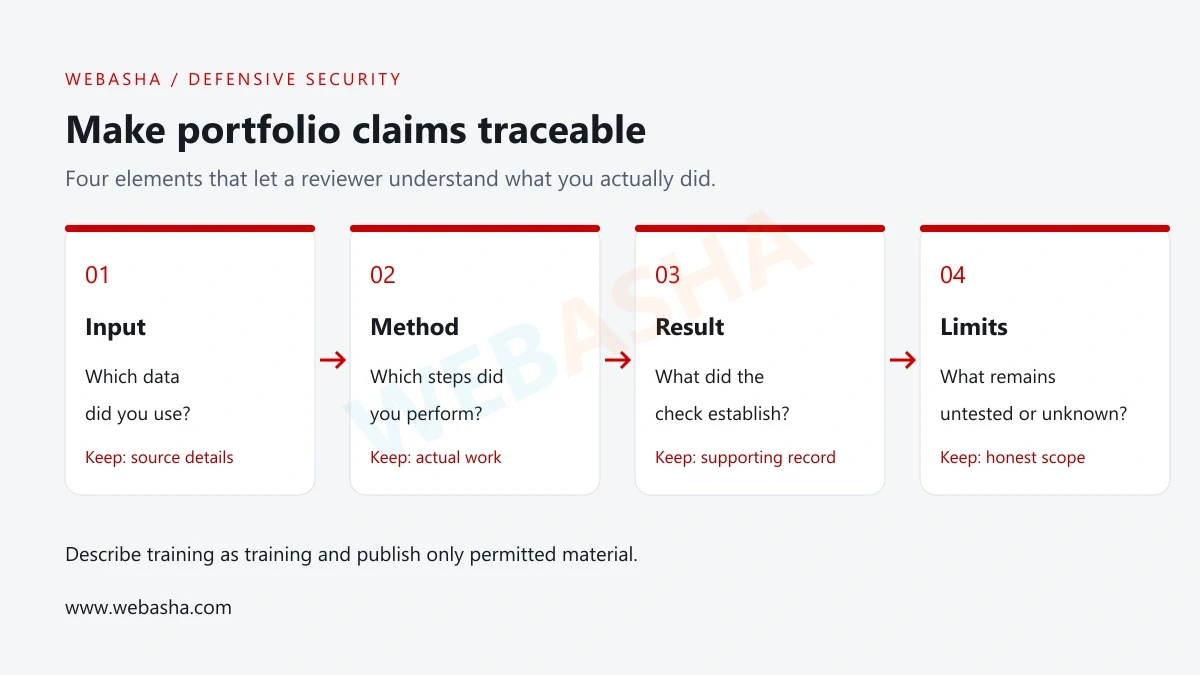
For each permitted project, include the question, source provenance, environment context, method, result and limitations. Explain your contribution if a task was shared. Keep confidential details and restricted walkthroughs private.
Use measured wording. “Summarised failures in a synthetic authentication dataset and documented unclassified outcomes” describes the first exercise accurately. “Prevented an enterprise breach” would claim an outcome the exercise did not establish.
The WebAsha beginner portfolio guide can help organise the presentation. For role context, review the SOC analyst skills guide and compare the tasks with actual job requirements.
Common problems are publishing screenshots without source context, counting every match as malicious and claiming unperformed work. Before sharing, ask a reviewer to trace a claim, reproduce a small check and identify one limit. Correct the write-up if that review exposes a gap.
Discuss SOC project review with WebAsha
Bring a permitted case note or a synthetic log exercise to a training discussion. Ask how instructors review query reasoning, evidence selection and reporting during supervised labs.
Ask WebAsha Technologies about SOC analyst training and beginner project review. Contact WebAsha with your starting skills and project goals.
Official references
Frequently Asked Questions
What's Your Reaction?
 Like
0
 Dislike
0
 Love
0
 Funny
0
 Wow
0
 Sad
0
 Angry
0

With a passion for staying on the cutting edge of technology trends, I am dedicated to delivering content that not only informs but also inspires. Whether you need in-depth analysis pieces, informative guides, or thought-provoking opinion pieces, I craft content that resonates with tech enthusiasts and professionals alike.