Welcome!

Unlock your personalized experience.
Sign Up
Tag

Threat detection Articles, Guides & Tutorials - Page 2

25 posts Page 2 / 2

What Is a SOC? Security Operations and Shift Handoffs

A Security Operations Center, or SOC, is a team and operating arrangement for detecting, investigating and coordinating responses to security threats. It may be internal, outsourced or shared between teams. Its coverage hours and response authority must be agreed explicitly. Logs and detection products help, but the useful outcome is an evidence-based decision with an owner.

AI Tools for Cybersecurity: Categories and Evaluation

Evaluate an AI cybersecurity tool against one defined task, the data it can access and the decisions it may influence. Detection models, query assistants and incident-summary tools do different work, so a long product list is a poor comparison. Start with an approved, representative test set and human-reviewed reference results. Check missed findings, incorrect findings, unsupported statements and data handling.

Serverless Runtime Security: Check Identity, Events and Limits

Serverless security combines application checks, narrowly scoped cloud permissions, supported runtimes and observable behavior. Providers manage infrastructure, while teams still own code, dependencies, event handling and access decisions. Runtime extensions or instrumentation can add visibility, but support and resource effects depend on the platform and function model.

How Generative AI Changes Security: Review New Trust Boundaries

Generative AI can help produce explanations and drafts, while its adoption also changes where information is read, processed and acted on. Review the data sources, model service, retrieved material, logs and connected tools as a complete application. A text-only assistant and an agent that changes accounts have different consequences when output is wrong or manipulated.

10 Cybersecurity Tips for Businesses with Practical Checks

These ten business cybersecurity tips turn broad advice into assigned actions and checks: inventory important services, name risk owners, protect sign-ins, limit access, maintain software, practise reporting, secure work devices and connections, test recovery, prepare incident handling and verify supplier responsibilities. Use them according to your actual risks and obligations.

Will AI Replace Ethical Hackers? Workflows, Limits and Skills

AI can change ethical hacking tasks, including evidence review, explanation and report drafting, but current capabilities do not establish a reliable prediction about every future job. Evaluate the actual workflow, its authority and the quality of its results. The invented draft below makes a claim that its cited advisory does not support and recommends an unapproved action.

Open Source Cybersecurity Tools: Choose by Evidence Needed

Choose cybersecurity tools by the question you need to answer, the data you may collect and the person who will maintain them. Network monitoring, endpoint investigation, file scanning and intelligence sharing solve different problems. Start with a small authorised evidence exercise, check the exact edition and licence, and measure whether another analyst can use the result.

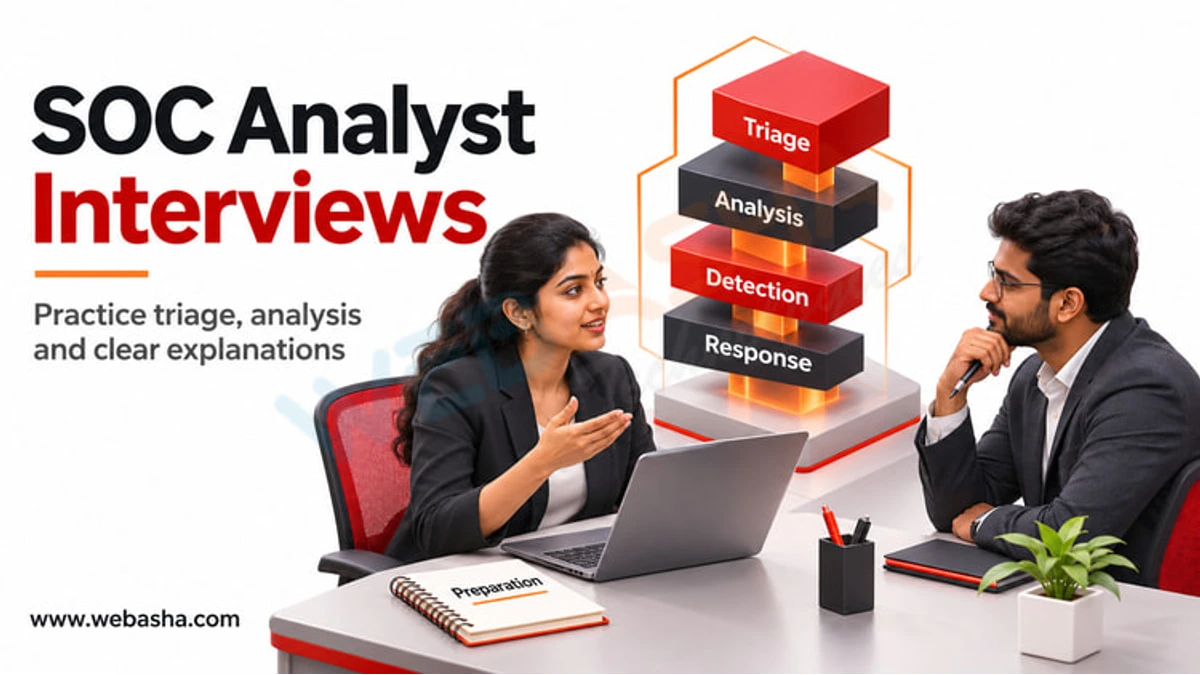
SOC Analyst Interview Questions with a Rolling-Window Example

SOC analyst interviews test how you interpret evidence and choose the next authorized action. Explain alerts, logs, networking, response and detection logic through the facts supplied. A checked offline exercise compares fixed minute buckets with a rolling 60-second condition, showing why similar-looking counts can answer different questions.