Welcome!

Unlock your personalized experience.
Sign Up
Tag

Cybersecurity automation Articles, Guides & Tutorials - Page 2

55 posts Page 2 / 4

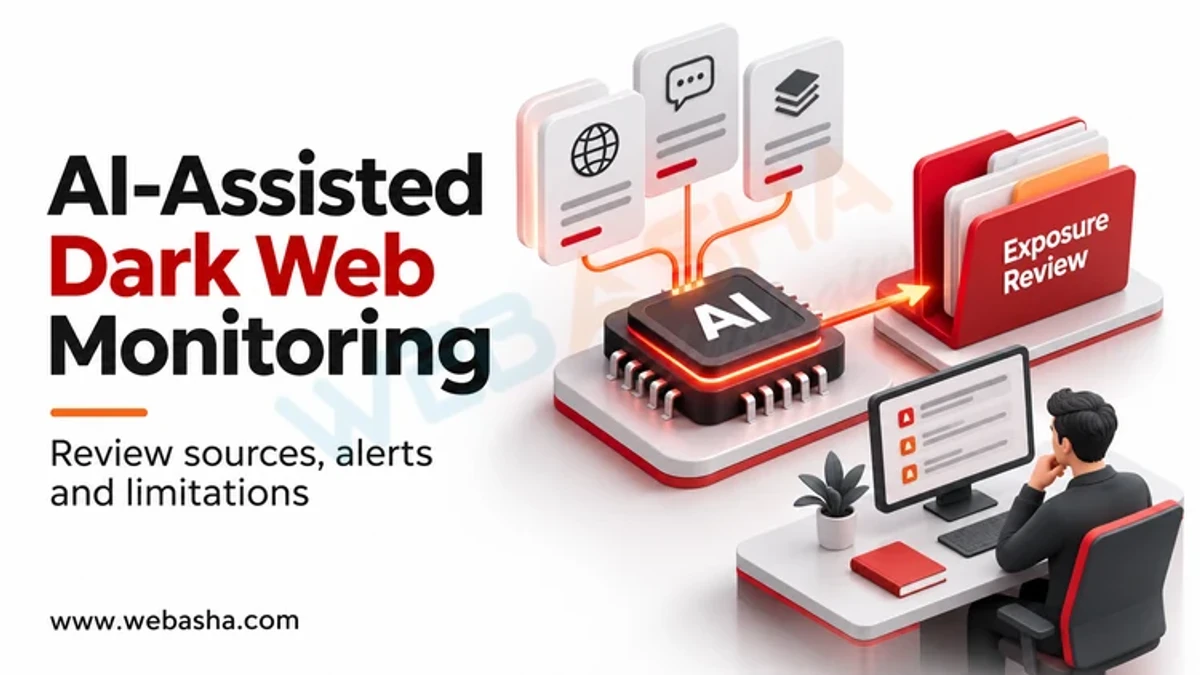
How to Evaluate AI Dark Web Monitoring Services: Questions to Ask

Evaluate a dark web monitoring service by testing it against your own assets, not its marketing. Ask what sources it covers and how it collects them lawfully, how its AI separates real leaks from recycled or fake data, how fast and how accurate alerts are, and whether findings arrive in formats your SIEM or SOAR can use.

How AI Helps Detect Advanced Persistent Threats (APTs)

Advanced persistent threats (APTs) are well-resourced groups, often state-linked, that break in quietly and stay for months. They frequently avoid malware, using stolen accounts and built-in system tools instead, so signature tools miss them.

Machine Learning for Zero-Day Detection: What Works and Its Limits

Machine learning helps with zero-days in two ways. It can find unknown vulnerabilities before attackers do, and it can flag attacks that match no known signature by spotting unusual behaviour. There is real evidence for the first: Google’s Big Sleep agent found a previously unknown memory-safety bug in a development version of SQLite in 2024.

AI-Driven Exploitation: How Dangerous Is It, Based on the Evidence?

AI-driven exploitation is a real and growing risk, but the public evidence shows it speeding up existing work rather than creating unstoppable attackers. In DARPA's AI Cyber Challenge final in August 2025, automated systems found and patched many planted bugs and also found 18 real vulnerabilities. Google's Big Sleep agent has found real memory-safety flaws in SQLite.

AI Pentesting Frameworks and Agents: What Exists and How to Evaluate

AI pentesting frameworks fall into four broad groups: LLM assistants that guide a human tester, agentic orchestrators that plan and run tool steps, scanners with AI-assisted triage, and adversary emulation platforms such as MITRE Caldera that automate known techniques. None replaces a skilled tester.

Automation in Penetration Testing: What to Automate and What Not To

Automate the repeatable parts of a penetration test: asset discovery within scope, vulnerability scanning, checking known issues, evidence capture and report formatting. Use AI as an assistant for triage, research and drafting. Keep humans in charge of scoping, deciding what to test next, exploiting anything, chaining findings, judging business impact and talking to the client.

AI vs Manual Pentesting: Which Is More Effective, Per the Evidence?

Neither wins on its own. AI-assisted testing is faster and more consistent at broad, repeatable work such as scanning, triage and drafting reports. Manual testing remains more effective at finding access control flaws, business logic issues and chained attack paths, and at judging real business impact.

Pros and Cons of Security Automation: SOAR Playbooks and Failure Modes

Security automation, usually delivered through SOAR (security orchestration, automation and response) playbooks and AI-assisted triage, brings speed, consistency and relief from repetitive alert handling. Its downsides are just as real: a bad rule can block legitimate users at machine speed, integrations break silently, AI triage can be misled by crafted input, and playbooks go stale as systems change.

How AI Is Making Cyber Threat Intelligence Smarter: STIX to Review

AI makes cyber threat intelligence smarter mainly by handling the tedious parts of production. It reads incoming reports, extracts indicators and behaviours, converts them into structured formats such as STIX 2.1, enriches them with context, removes duplicates and suggests MITRE ATT&CK mappings. That frees analysts to judge relevance, confidence and impact for their own organisation. AI does not decide what is true.

How AI Helps Detect and Prevent Ransomware Attacks

AI helps against ransomware mainly by spotting behaviour rather than known files. Endpoint models flag a process that suddenly reads and rewrites many files, renames extensions or deletes shadow copies. Backup platforms use anomaly detection to notice sudden drops in deduplication or bursts of changed files that suggest encryption. Identity analytics catch unusual admin logins that often come before deployment.

AI in Cybersecurity: Hype or Real Impact? A Checklist to Judge Claims

AI in cybersecurity is neither pure hype nor a complete revolution. There is documented, measurable impact in a few areas: AI-generated fuzz targets helped Google find 26 new open-source vulnerabilities in 2024, machine learning has long improved spam and malware filtering, and analysts use AI assistants to summarise alerts.

Can AI Replace Cybersecurity Professionals? A Task-by-Task View

AI is unlikely to replace cybersecurity professionals as a whole, but it is already replacing some tasks. Looking task by task makes this clearer. Log enrichment, first-pass alert triage, report drafting and known-pattern detection can be largely automated. Threat hunting, code review and phishing analysis become faster with AI assistance but still need human judgement.

Which Cybersecurity Tasks Should You Automate First?

Automate first the security tasks that are frequent, repetitive, low risk if they go wrong and easy to measure. For most organisations that order is: asset inventory, patching of known exploited vulnerabilities, log collection, alert enrichment and first-pass triage, then routine reporting. These tasks consume analyst time every day and follow clear rules, so automation gives quick, visible gains.

AI and the Future of Cybersecurity Jobs: What the Workforce Data Says

AI is reshaping cybersecurity jobs by changing the skills employers want rather than shrinking the field. The ISC2 2025 Cybersecurity Workforce Study, based on 16,029 respondents, found AI was the most cited skill need at 41%, ahead of cloud security at 36%. Most respondents expect AI to create more specialised skills (73%) and require more strategic thinking (72%).