Welcome!

Unlock your personalized experience.
Sign Up
Tag

Ethical Hacking Articles, Guides & Tutorials

168 posts Page 1 / 11

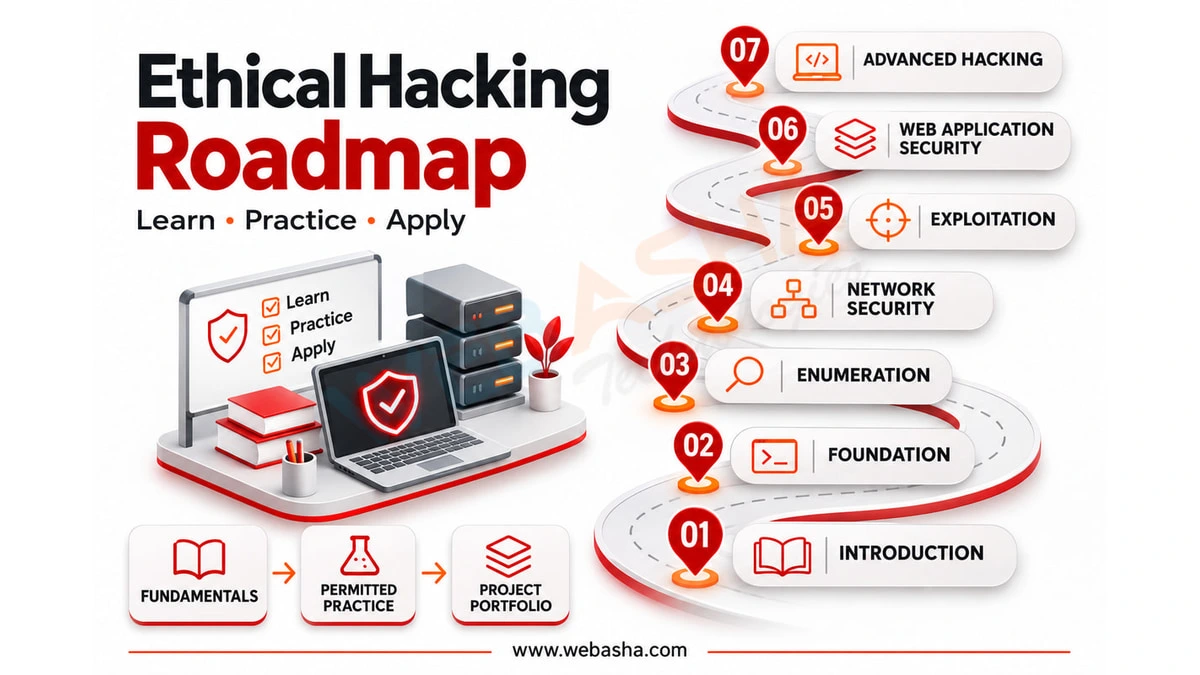
Ethical hacking means using an attacker's tools and techniques with permission, to show an organisation where it is exposed. These posts explain the phases of an ethical hack, the tools involved and how to build the skill set step by step.

Our CEH v13 AI course covers the theory and the CEH Practical course covers the hands-on exam. Both are combined in CEH Master.

What Is Bug Bounty and How Do Beginners Start Earning Safely?

A bug bounty is a programme in which an organisation invites independent researchers to find security flaws in specified systems and pays for valid, first-reported findings. You start by joining a platform such as HackerOne, Bugcrowd, Intigriti or YesWeHack, reading each programme's scope and rules carefully, testing only in-scope assets, and writing clear reports with reproducible steps and impact.

Different Fields in Cybersecurity: A Beginner Guide to Specialisations

Cybersecurity has many specialisations. The main fields are security operations (monitoring and responding to alerts), incident response and digital forensics, penetration testing and red teaming, application security, cloud security, identity and access management, governance, risk and compliance (GRC), operational technology (OT) security, threat intelligence, and security architecture and engineering.

What Is Network Sniffing? How It Works and How to Protect Yourself

Network sniffing is capturing and reading packets as they cross a network. Administrators do it legitimately with tools such as Wireshark to troubleshoot and monitor. Attackers do it to steal passwords, session cookies and data sent without encryption. On modern switched networks an attacker usually needs a foothold, such as a compromised device, rogue Wi-Fi or ARP spoofing, to see other people's traffic.

What Is Network Scanning? Types, Detection and Defence Explained

Network scanning is the process of sending probes to a range of addresses to find live hosts, open ports, running services and known weaknesses. It has four common types: host discovery, port scanning, service and version detection, and vulnerability scanning. Attackers scan to find targets, while defenders and authorised testers scan their own networks to find exposures before attackers do.

How to Get Into Cybersecurity Without a Degree: A Complete Guide

You can enter cybersecurity without a degree by building provable skills instead of formal qualifications. Learn networking, Linux, Windows and security basics, earn an entry certification such as ISC2 Certified in Cybersecurity (CC) or CompTIA Security+, practise in a legal home lab, and publish a portfolio of write-ups and projects.

Msfvenom and Metasploit Payloads: How Defenders Detect and Block Them

In the Metasploit Framework, a payload is the code that runs on a target after a successful exploit or after a user runs a malicious file, usually to give the operator a remote session. Msfvenom is the framework utility that packages payloads into files or scripts. Defenders do not need to build payloads to stop them.

Penetration Tester Careers: Skills, Tools, Certifications and Paths

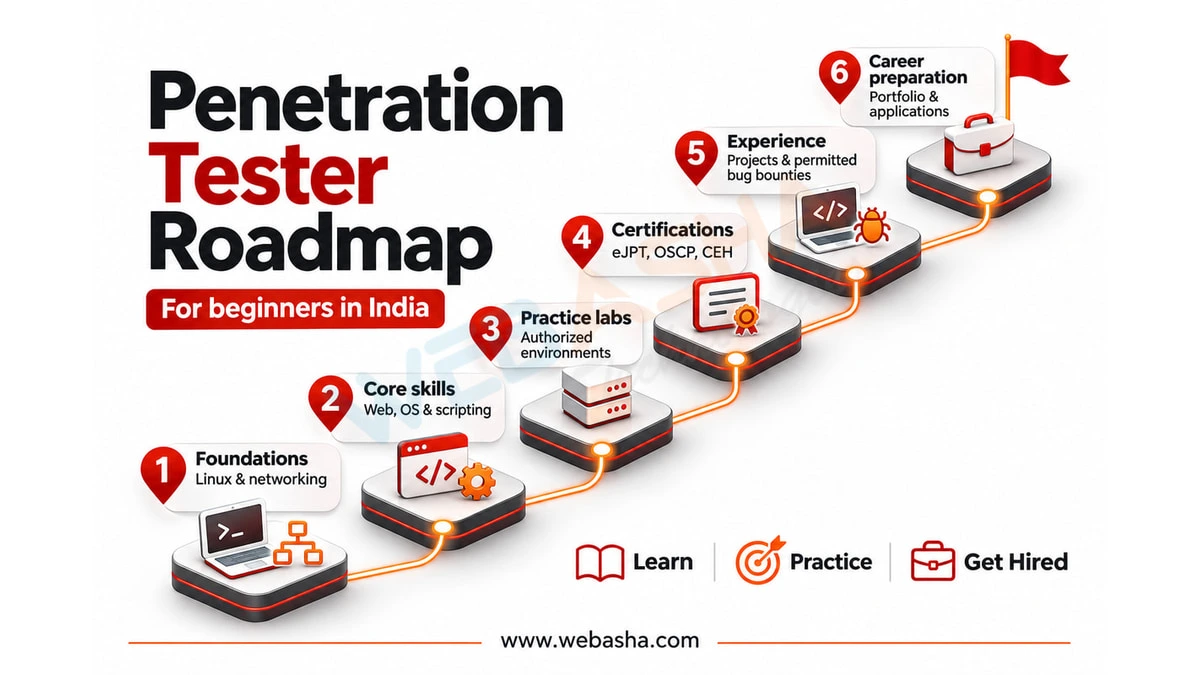
A penetration tester is a security professional who is paid and authorised to test systems the way an attacker would, then report weaknesses and fixes. The NIST NICE Framework describes this kind of work under vulnerability assessment and offensive security roles. Core skills include networking, Linux and Windows administration, web application security, Active Directory, scripting and clear report writing.

Entry Routes Into IT Infrastructure, Cybersecurity and Cloud

IT infrastructure, cybersecurity and cloud share one foundation: networking, operating systems, especially Linux and Windows, and basic scripting. Without experience, most people enter infrastructure through IT support or junior system administration, cybersecurity through SOC analyst or GRC roles, and cloud through cloud support or operations roles.

Ten Core IT Skills to Learn and the Evidence Behind Each

Ten core IT skills worth learning are Linux and operating systems, networking, scripting with Python, version control with Git, cloud fundamentals, security fundamentals, databases and SQL, containers and automation, data analysis, and AI literacy.

Google Hacking Database (GHDB): How Dorks Expose Data and Defences

The Google Hacking Database (GHDB) is a public catalogue, hosted on Exploit-DB and maintained by OffSec, of search queries called Google dorks that reveal sensitive information search engines have indexed by mistake. Dorks work because servers expose files, directory listings, login pages, error messages and device panels to crawlers without authentication.