Welcome!

Unlock your personalized experience.
Sign Up
Tag

Ethical Hacking Articles, Guides & Tutorials - Page 4

168 posts Page 4 / 11

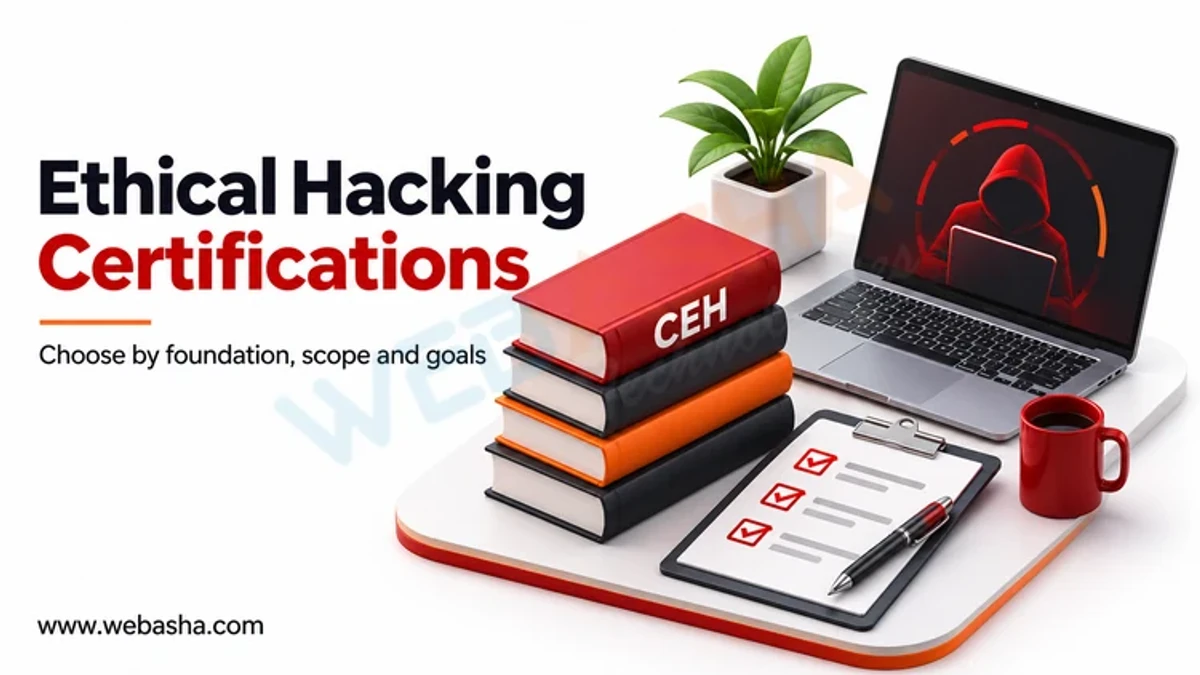
Ethical Hacking Certifications for Beginners: A Practical Guide

Beginners usually start with a foundation certificate, then add one hands-on ethical hacking certificate. Common foundations are ISC2 Certified in Cybersecurity (CC) and CompTIA Security+, whose new V8 exam SY0-801 has a launch date of 17 November 2026. Entry-level hacking options include INE eJPT, a practical exam expanded to 45 questions in March 2026, CompTIA PenTest+ (exam PT0-003) and EC-Council CEH v13.
Ethical Hacking for Business Owners: Commissioning a Security Test

As a business owner you do not need to learn hacking. You need to commission it properly. Ethical hacking is security testing carried out with your written permission to find weaknesses before criminals do. Your job is to decide what should be tested, choose a competent provider, sign a contract and authorisation letter that set the scope and rules, and make sure the findings are fixed and retested.

What Are the Prerequisites for Learning Ethical Hacking?

You need four foundations before ethical hacking training makes sense: basic networking (IP addresses, ports, DNS, HTTP), comfort with the Linux command line, a working knowledge of Windows accounts and services, and enough scripting to read and change a short Bash or Python script.

Ethical Hacking Without Coding: Roles That Fit and Where They Stop

Yes, some work around ethical hacking needs little or no coding. Governance, risk and compliance (GRC) staff scope tests and track fixes. Social engineering testers run authorised phishing and awareness exercises. Report writers and quality reviewers turn raw findings into documents a client can act on. Vulnerability management analysts run scanners and prioritise results. These roles have limits.

Ghidra Reverse Engineering Tool: Install, Features and First Analysis

Ghidra is a free, open-source software reverse engineering suite released by the US National Security Agency in 2019. It disassembles and decompiles compiled programs so you can read what they do without the source code. To install it, download the release zip from the official GitHub page, check its SHA-256 value, install the 64-bit Java JDK named in the README, extract the zip and run ghidraRun.

Beginner’s Guide to Ethical Hacking: A Step-by-Step Learning Path

Learn ethical hacking in this order. First, computer and networking basics. Second, Linux and the command line. Third, a scripting language such as Python. Fourth, how web applications work and the common ways they fail. Fifth, a home lab where you practise only on machines you own and on intentionally vulnerable applications. Sixth, a testing method and report writing.

Ethical Hacking vs Cybersecurity: Scope, Roles and How They Differ

Cybersecurity is the whole discipline of protecting systems, networks and data. It covers governance, prevention, monitoring, incident response and recovery. Ethical hacking is one activity inside it: authorised testing that imitates an attacker to find weaknesses before a real one does. Every ethical hacker works in cybersecurity, but most cybersecurity professionals are not ethical hackers.

How to Become an Ethical Hacker: Your First Step in One Week

The first step to becoming an ethical hacker is not a tool. It is three things you can settle in one week: the right mindset, a clear understanding of what is legal, and a safe lab of your own. Spend the first days learning what ethical hackers actually do and what Indian law says about unauthorised access.

Do You Need Coding Skills for Ethical Hacking?

You can begin learning ethical hacking before you can program, but you still need to understand the systems and tools you use. Early tasks may involve reading requests, checking settings and documenting evidence. Scripting becomes useful when you need to process data, repeat a controlled task or understand application behaviour.

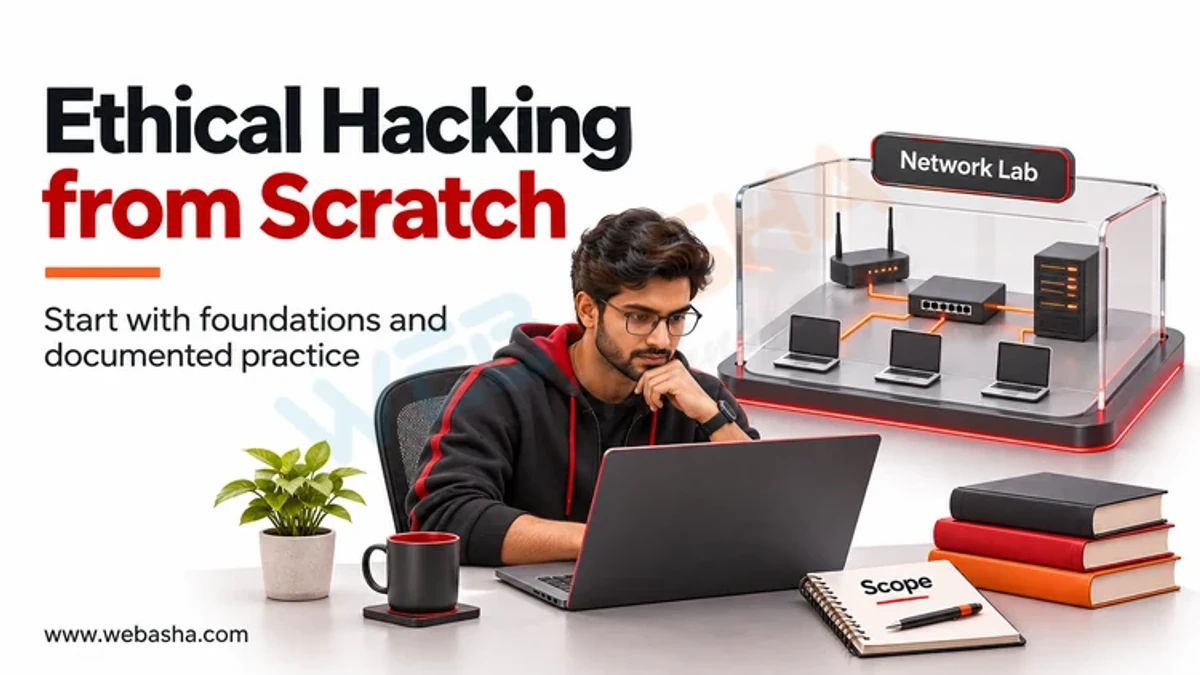
How to Start an Ethical Hacking Career from Scratch

Start an ethical hacking career by identifying the work you want to do, checking your computing foundations and building evidence through authorised practice. Learn networks, operating systems, web behaviour and basic scripting before relying on security tools. Produce a small assessment report, seek feedback and compare your skills with real entry requirements.

Is Ethical Hacking Hard to Learn? How to Diagnose the Difficulty

Ethical hacking can be difficult because it combines computing foundations, unfamiliar tools and judgement about incomplete evidence. The difficulty is usually easier to manage when you identify the exact obstacle: a networking gap, a Linux problem, an unclear web concept or an exercise that is too advanced. Reduce the task, practise with feedback and repeat it independently.

Is Cybersecurity a Good Career? How to Assess Your Fit

Cybersecurity can be a suitable career if you enjoy investigating systems, managing risk and explaining decisions, but suitability depends on the role and your circumstances. Technical testing is one option among security operations, governance, engineering and learning roles. Assess the actual tasks, entry requirements, working arrangements and learning costs before committing to a transition.

Cybersecurity Job Roles and Responsibilities: A Practical Guide

Cybersecurity roles differ in what they protect, the decisions they make and the evidence they produce. Security operations analysts investigate events; engineers build and maintain controls; governance and assurance staff evaluate risk and evidence; authorised testers assess defined targets.

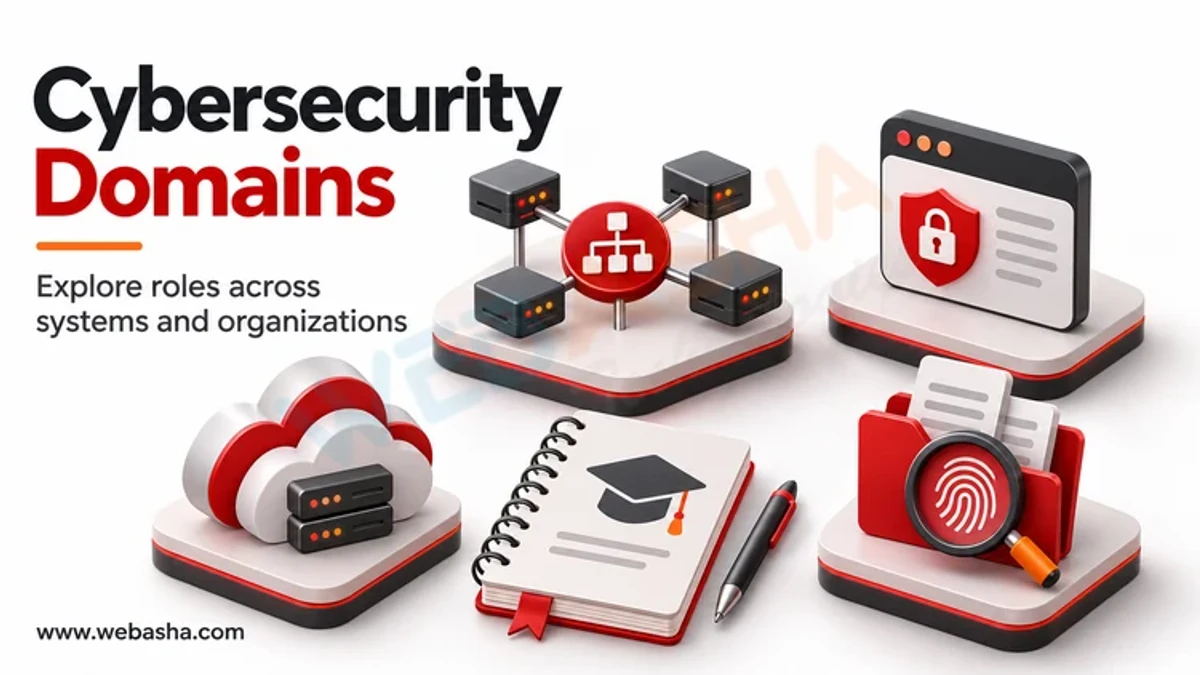
Cybersecurity Domains: What Each Area Protects

Cybersecurity domains group related problems, such as protecting identities, applications, infrastructure or organisational information. They overlap: a cloud application can involve access management, secure development, monitoring and governance at the same time. Use domains to understand the controls and evidence needed, then investigate the actual responsibilities of a role.

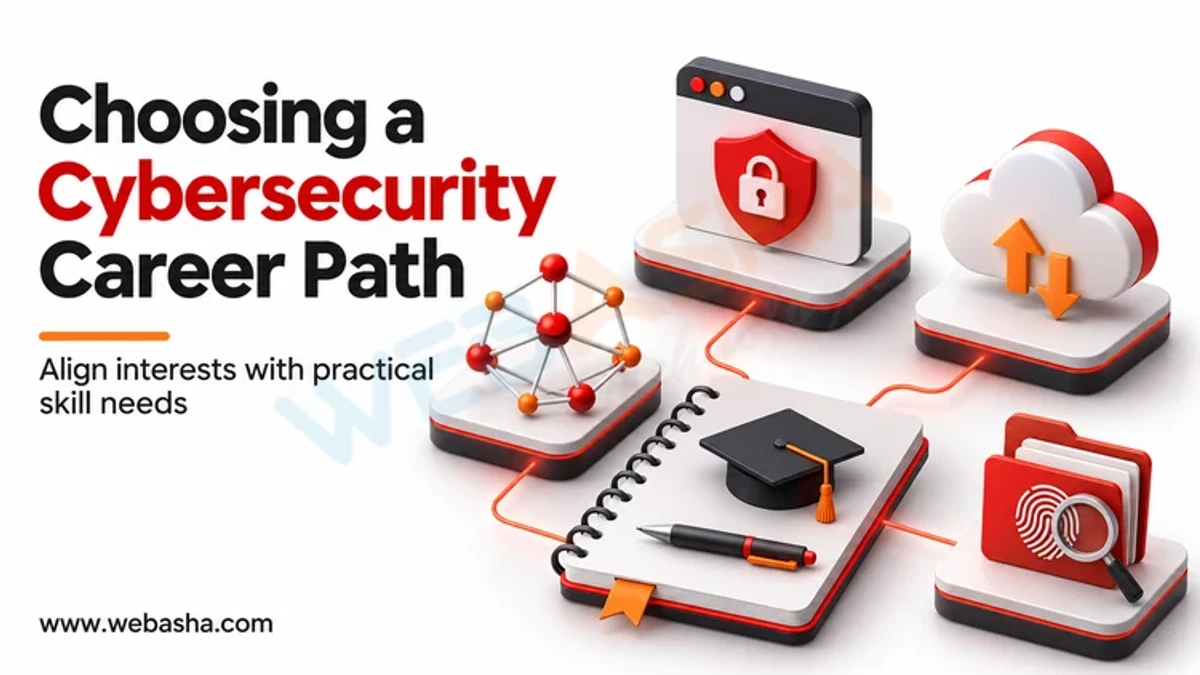
Cybersecurity Career Paths: Choosing Your Next Learning Step

Choose a cybersecurity career path by comparing a few role families, trying relevant tasks and checking current entry conditions. Start with the work you want to perform rather than a fixed ladder from beginner to architect. Operations, engineering, application security, governance and other directions have different prerequisites, outputs and decision authority.

Cybersecurity Skills for Job Applications: What to Demonstrate

Build cybersecurity application evidence around the responsibilities of a specific role. Foundations such as networks, operating systems, access control and clear communication support many tasks, but the required depth varies. Demonstrate how you interpret evidence, recognise uncertainty, work within authority and respond to feedback.