Welcome!

Unlock your personalized experience.
Sign Up
Category

Technology Trends & Innovations

Stay updated on the latest technology trends and innovations that are shaping the future of IT, from AI to blockchain and more.

45 posts Page 1 / 3

How to Implement Zero Trust: Pillars, Maturity Stages and a Roadmap

Zero trust enhances enterprise security by checking every access request against identity, device health and context, and granting only the access needed. To implement it, follow CISA's Zero Trust Maturity Model v2.0: assess your current stage across five pillars (identity, devices, networks, applications and workloads, data), then move each pillar from Traditional towards Initial, Advanced and Optimal.

Explainable AI (XAI): Methods, Tools and Limits for Trustworthy AI

Explainable AI (XAI) is the set of methods that help people understand why a model produced a particular output. Some models are interpretable by design, such as short decision trees or linear models; complex models such as gradient-boosted trees and neural networks need after-the-fact methods like SHAP, LIME or permutation importance to show which inputs mattered.

AI Agents Explained: How They Work and Where They Are Used Safely

An AI agent is software that pursues a goal by deciding on steps, calling tools such as search, calendars or code runners, looking at the results and deciding what to do next, with little human input between steps. Today most agents use a large language model to plan and choose tools.

Generative AI Tools Beyond ChatGPT: Content, Coding and Simulation

Beyond ChatGPT, widely used generative AI tools include Google Gemini and Anthropic Claude for writing, analysis and coding; image generators such as Midjourney and Adobe Firefly; video generators such as OpenAI Sora and Runway; and coding assistants such as GitHub Copilot. Simulation platforms such as NVIDIA Isaac Sim use generated scenes and synthetic data to train robots and vision systems.

AI Phishing and Deepfake Scams: How to Recognise and Stop Them

AI-driven phishing uses generative AI to write convincing, personalised messages in any language without the spelling mistakes people used to look for. Deepfake scams use cloned voices, fake video calls or generated photos to impersonate a boss, relative, official or romantic interest. The FBI warned in December 2024 that criminals use these tools to make fraud more believable at scale.

Cybersecurity Mesh Architecture (CSMA): Layers, Standards and Setup

Cybersecurity Mesh Architecture (CSMA) is an approach, described by Gartner, in which separate security tools share data and policy through common layers instead of working in isolation. It is usually summarised as four supporting layers: shared analytics and intelligence, a distributed identity fabric, consolidated policy and posture management, and consolidated dashboards.

What Is XDR? How It Compares With EDR, NDR and SIEM

XDR, or extended detection and response, is a security platform that collects telemetry from endpoints, network, email, identity and cloud, correlates it into incidents, and lets analysts respond from one console. EDR covers only endpoints, NDR only network traffic, and a SIEM collects and stores logs from everything but needs more tuning to turn them into incidents.

Quantum Computing and Encryption: Post-Quantum Cryptography Explained

A large, error-corrected quantum computer running Shor's algorithm could break the public-key cryptography the internet relies on today, including RSA, Diffie-Hellman and elliptic-curve cryptography. Symmetric encryption such as AES-256 and hash functions are much less affected. No such machine exists yet, and nobody can say reliably when one will, but data stolen today could be decrypted later.

How AI Helps Detect and Respond to Zero-Day Exploits, and Its Limits

A zero-day exploit targets a flaw the vendor has not yet fixed, so there is no signature or patch for it. AI helps by watching behaviour instead of known patterns: a browser suddenly launching a shell, a document reader writing an executable, or a server process connecting to a rare host.

Useful ChatGPT Features Many Users Miss, and Their Privacy Settings

Several ChatGPT features that many people overlook can make it more useful and safer: custom instructions that tell it how to respond every time; memory, which you can view, edit or turn off; temporary chats that are not saved to history or used for memory; projects that group chats and files; file uploads for summarising documents and analysing data; canvas for editing longer text and code; management of shared…

Best Free Offline AI Image Editor: Krita with Local AI Setup

For most people, the best free offline AI image editor is Krita, the open source painting program, with the open source Krita AI Diffusion plugin running a local ComfyUI server. Together they provide generative fill, object removal, outpainting, upscaling and text-to-image on your own computer, with no subscription and no uploads.

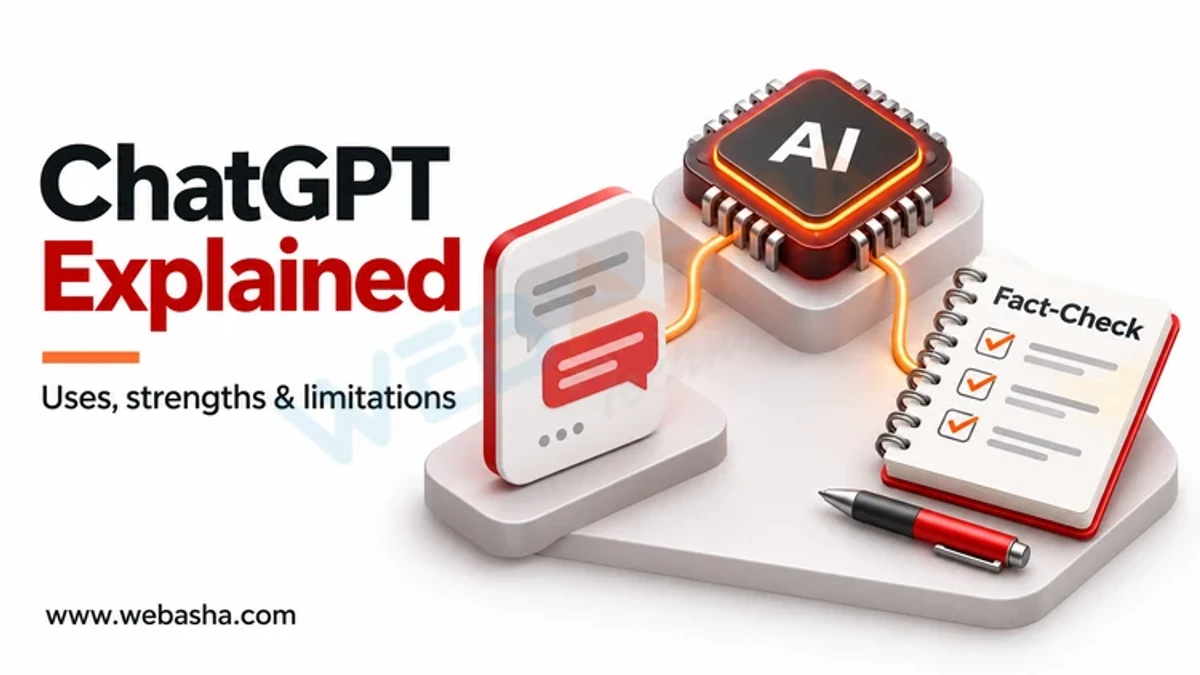
What Is ChatGPT and How Does It Work? A Plain-English Guide

ChatGPT is an AI chatbot made by OpenAI, first released on 30 November 2022. It is built on large language models (LLMs) that use the transformer architecture to predict the next piece of text, called a token, based on everything before it. The models are first trained on large amounts of text, then refined with human feedback so they follow instructions and respond helpfully.

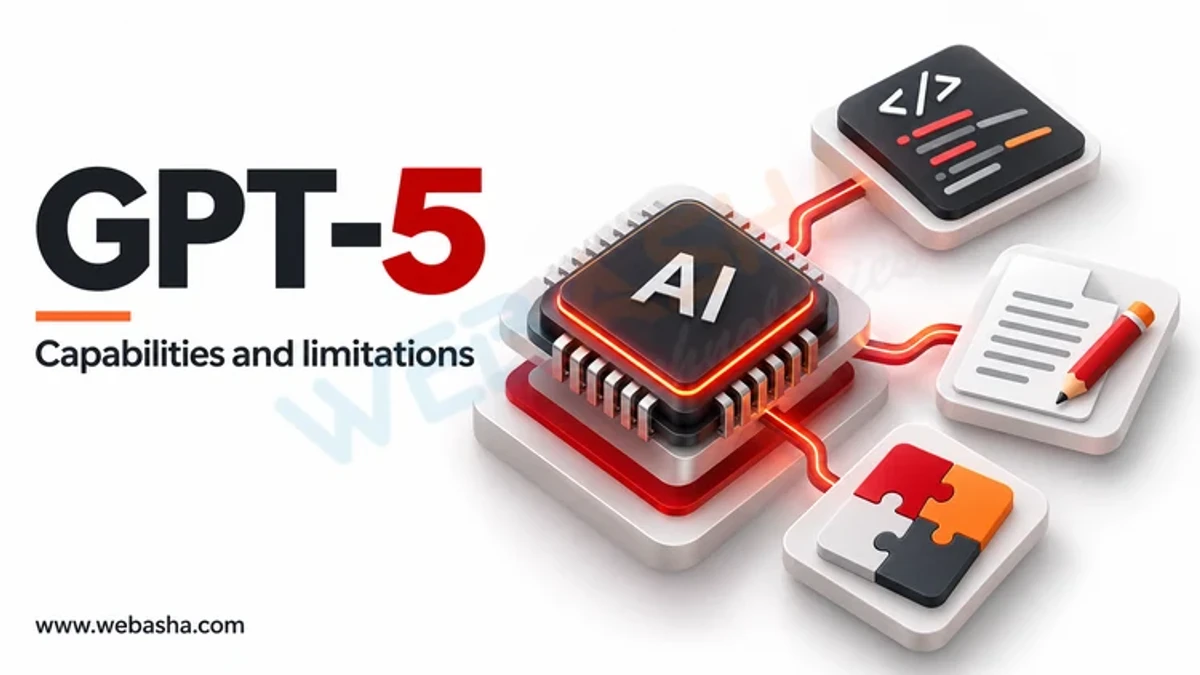
What GPT-5 Introduced and What It Means for AI Users and Teams

OpenAI released GPT-5 on 7 August 2025. In ChatGPT it was presented as a unified system: a fast model for most questions, a deeper reasoning model ("GPT-5 thinking") for harder problems, and a router that decides which to use, with users able to ask it to think longer. In the API, OpenAI offered three sizes, gpt-5, gpt-5-mini and gpt-5-nano, with new controls for reasoning effort and response length.